


A Guide to Navajo, Hopi, Zuni, and Santo Domingo Jewelry
Zuni, Hopi, Navajo, and Santo Domingo artists, over hundreds of years, have developed different Native American jewelry styles that reflect cultural history, materials, and technique. This guide explains how to recognize each style, how silversmithing spread across the Southwestern United States, and what to look for in authentic pieces, including hallmark clues and tribe-specific earring designs. Individual artists sometimes explore styles beyond their home tradition, so these traits are guidelines for identification rather than rigid rules.
How to Authenticate and Identify at a Glance
- Hallmarks and maker signatures: Look on the reverse or underside for an artist hallmark or tribal mark, then consult a reliable reference to confirm the artist or affiliation.
- Materials and craftsmanship: Authentic jewelry pieces are handcrafted; expect natural materials and clear evidence of traditional methods.
- Source and documentation: Purchase from established galleries, markets, or directly from artists who provide authenticity certification.
- Recognize tribal influences: Each tribe’s visual language and method helps you identify a piece more confidently.
How Silversmithing Spread, and Why Styles Differ
Silversmithing in the Southwest has a relatively recent origin; it was taught by Spanish and Mexican influences in the nineteenth century, then embraced and expanded first by the Navajo.
Over time, Zuni, Santo Domingo, and Hopi artists refined and contributed their own styles and techniques, creating the diversity we recognize today.
Because Hopi and Zuni communities are proximate to other Pueblo groups, you will notice shared silversmithing practices, even as each tribe maintains distinct design traditions.
Distinguishing Each Jewelry Style by Tribe
Navajo Tribe
Known for a deep spiritual connection to the land, balance with nature, and strong oral traditions, the Navajo people celebrate harmony through ceremonies and storytelling. Their artistry reflects these values with bold, intricate designs.
Navajo Jewelry
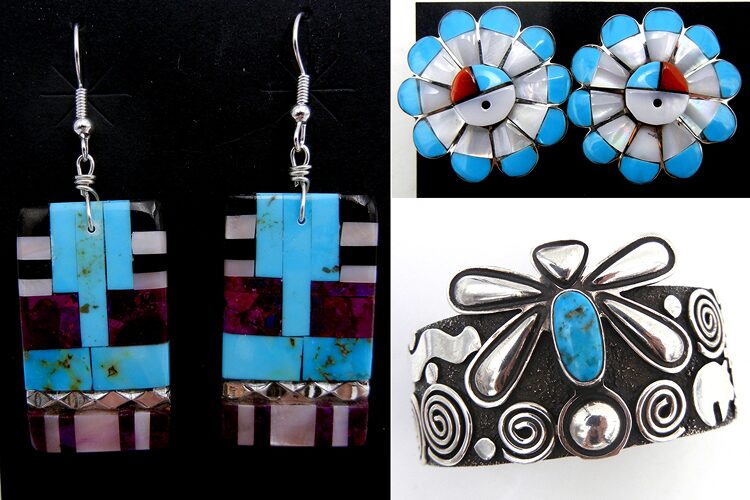
Navajo jewelry is famed for shaping sterling silver around stones, often turquoise, black onyx, malachite, or blue azurite. Pieces tend to feel substantial, with heavy, exceptional silverwork.
A quick tell is when expertly formed silver surrounds larger, more natural-shaped stones.
Navajo artists commonly use techniques such as stamping, sandcasting, and complex platero construction, often with multiple stones and components.
Navajo Earrings
Renowned for exceptional silversmithing, Navajo earrings often feature sterling silver combined with vibrant stones such as turquoise, coral, and onyx. Large, bold settings are common, and techniques like stamping, beadwork, and overlay highlight their craftsmanship. Turquoise, considered sacred for its protective and beautiful qualities, is the most frequent centerpiece. Motifs often include feathers, arrows, and geometric patterns, capturing the essence of Southwestern aesthetics.
Hopi Tribe
With traditions rooted in agriculture, spirituality, and a harmonious relationship with the natural world, the Hopi honor kachinas as spiritual beings that connect humans with deities. Their jewelry reflects these sacred values.
Hopi Jewelry
After World War II, Hopi silversmiths organized a cooperative that helped define a distinct Hopi style, the overlay method of fusing two layers of silver with the lower layer darkened so the carved designs stand out. Hopi jewelers are renowned for overlay work, typically silver on silver, with polished raised motifs over darkened backgrounds, often featuring clan symbols, kachinas, and other cultural imagery. Many Hopi pieces feature only sterling silver, with luminous surfaces and clean linework, typically without large stones.
Hopi Earrings
Distinguished by the overlay technique, Hopi earrings layer silver sheets to create intricate, symbolic patterns with striking contrasts of smooth silver against oxidized backgrounds. Designs often feature clan symbols and kachina figures, emphasizing spiritual and ancestral connections. Typically, Hopi earrings use minimal stonework, favoring complex silver patterns to convey meaning and artistry.
Zuni Tribe
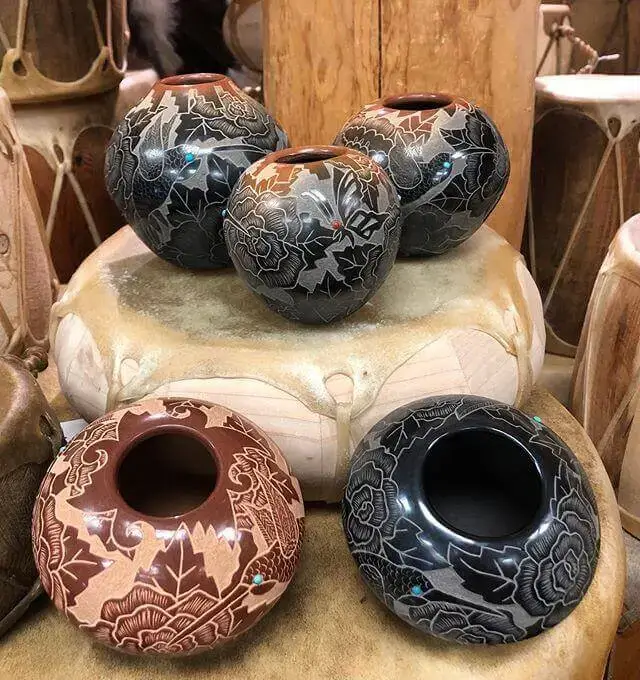
Deeply connected to the earth and a belief in the sacredness of all things, the Zuni people are known for their pottery, carvings, and distinctive jewelry. Fetish carvings and motifs honor the balance between the physical and spiritual worlds.
Zuni Jewelry
While Zuni jewelry making stretches back thousands of years, Zuni silversmithing was strongly shaped by techniques introduced in the 1870s, then refined into the tribe’s celebrated inlay, petite point, and needlepoint work.
Zuni jewelry emphasizes cutting stones into intricate shapes and setting them into silver as inlay, petite point, and needlepoint, favoring many small, carefully cut stones over one large focal point. Channel inlay arrangements, mosaics, and precise patterning are hallmarks of the style. Zuni artists also carve animal fetishes used decoratively and in jewelry, which are believed to embody power, protection, and luck.
Zuni Earrings
Famous for masterful stonework, Zuni earrings showcase intricate inlay using turquoise, coral, mother-of-pearl, jet, and other stones to form detailed mosaics of animals, birds, and geometric shapes. Petit point, with tiny individually cut stones arranged in precise patterns, adds further refinement and texture. Their use of vibrant colors and meticulous precision makes Zuni earrings masterpieces of Native American jewelry.
Santo Domingo Tribe
With a cultural heritage rich in pottery, beadwork, and jewelry, the Santo Domingo Pueblo values spiritual connection to nature and traditions honoring a supreme being, Awonawilona. Their artistry emphasizes simplicity and natural beauty.
Santo Domingo (Kewa Pueblo) Jewelry
Santo Domingo artisans specialize in beadwork using drilled stones and shells; silver is used sparingly, sometimes as ornate beads, while these Santo necklaces of natural stones and shells are signature. Heishi jewelry is unique to this Pueblo; stone and shell discs are hand-cut, hand-drilled, and strung, often with minimal silver, an echo of ancestral practices.
Santo Domingo Earrings
Known for beadwork and shell jewelry, these earrings often feature hand-cut and hand-drilled shell beads strung into intricate patterns. Natural materials such as turquoise, coral, and seed beads are commonly included, sometimes accented with silver. Lightweight yet elegant, Santo Domingo earrings balance traditional craftsmanship with contemporary refinement, reflecting both artistry and cultural pride.
Techniques Used in Authentic Native American Jewelry
- Stamping: A method where designs are imprinted onto silver using a stationary stamp. Each artist’s tool leaves a distinct mark, making their work recognizable. Unlike chasing, the stamp does not move, so the artist carefully positions it before striking. This technique is widely used by Navajo silversmiths.
- Repoussé: A technique where silver is hammered from the reverse side to raise designs on the front. This creates depth and intricate textures, showcasing both artistry and precision.
- Sandcast: Sterling silver is melted and poured into a sandstone mold bound with wet buckskin, which tightens as it dries. Once cooled, the casting is sanded and polished to a high shine. The resulting pieces often feature organic, flowing patterns inspired by the natural landscapes of the Southwest.
- Inlay: Multiple stones are shaped and set into patterned channels within silver, creating intricate designs. Arrangements may be linear, often known as “channel inlay,” or bowlike. This style is a hallmark of Zuni jewelry and is admired for its precision and colorful mosaics.
- Overlay: A signature style where two to three layers of silver are soldered together. The top layer is cut with designs, revealing a darkened, oxidized background beneath. Designs often depict clan symbols, animals, and kachinas, reflecting Hopi traditions. Hopi jewelers often use specialized tools, which give each artist’s overlay work a recognizably individual look.
- Platero: Jewelry is constructed from many individual components soldered together, often incorporating multiple stones. The squash blossom necklace is the most iconic example of this style, particularly associated with Navajo silversmiths.
- Fetish Necklaces: Intricate necklaces featuring hand-carved stone fetishes, often animals made from semi-precious stones. While bracelets exist, necklaces are most traditional and widely cherished, especially within Zuni artistry.
- Heishi: A Santo Domingo Pueblo specialty, featuring finely hand-cut stone or shell beads strung with sinew and minimal silver. This technique traces back to Ancestral Puebloan (Anasazi) traditions and remains popular for its natural, minimalistic aesthetic.
Quick Clues, How to Identify a Tribe in Mixed Pieces
- If a piece is mostly silver with raised patterns and dark linework, it likely reflects Hopi overlay traditions.
- If the silver appears to be shaped around large, natural stones, it often points to Navajo craftsmanship.
- If the stones are petite, expertly cut, clustered, or inlaid into channels, it typically indicates Zuni work.
- Look for a hallmark or signature stamped on the underside; these symbols can identify the individual artist or tribal affiliation.
- If you see hand-cut stone or shell beads strung with little to no silver, often in heishi strands, it typically indicates Santo Domingo (Kewa Pueblo) work.
- If the jewelry includes intricately carved animal figures (fetishes), it is usually connected to the Zuni tradition, where such carvings symbolize power, protection, and luck.
Where to Find Authentic Native American Jewelry
Palms Trading Company partners directly with Native American artists, so every piece we offer is authentic and ethically sourced; our team uses more than a century of combined expertise to help you identify and select jewelry with confidence.
If you are ready to explore or need help identifying the style of your piece, visit us online, contact us for questions, or use our free personal shopper service. We can also examine and appraise your jewelry to help confirm authenticity and value, ensuring you gain a deeper understanding of the different Native American jewelry styles represented in every unique piece.