


Zuni fetish carvings are more than art; they are expressions of spiritual belief, tradition, and ancestral connection. In this guide, we explore the meaning of Zuni fetishes, their history, the materials and craftsmanship behind them, and their enduring cultural importance as powerful Native American creations.
Origins and History
The Zuni people are a Pueblo tribe that has historically been situated in the Zuni River Valley in what is now Western New Mexico. The tribe has occupied this territory for thousands of years and is widely known for its farming and irrigation practices. They are also known for their strong arts and cultural traditions of jewelry making, stone carving, and pottery crafting.
The Zuni people’s beautiful and intricately carved stone fetishes date back as early as 650 A.D., with traditional carvings being made from stone or antlers. The carvings normally take the form of specific animals or icons that have spiritual significance to the Zuni people. Many fetishes are passed down through generations, with older fetishes being said to have the most power and value for the holder.
Even among other Pueblo tribes, such as the Navajo and the Isleta, stone fetish carvings are practiced; however, the Zuni fetishes are especially valued for their fine lapidary work and the beauty of the fetish carvings.
Spiritual Beliefs & Cultural Role
The Spirit in Every Carving
Zuni fetishes are normally palm‑sized carvings that take the form of spiritually significant animals or figures, and each carving is believed to hold the spirit of the animal or being it represents. These spiritual beings are thought to grant protection, help cure disease, influence weather, bring prosperity, promote fertility, guard from harm, or share their qualities with their holder, so long as the fetish is properly cared for.
The belief is that everything on this earth—people, plants, animals, natural phenomena, mountains, and even stones—has a spirit, energy force, or essence.
The Six Guardian Animals (Directions)
According to Zuni tradition, there are six guardian fetishes that align with the sacred directions of the world. Each direction is represented by a different animal with its associated spiritual qualities:
Guardian of the North: The Mountain Lion
The mountain lion holds a special place in Zuni tradition due to its intuition, resourcefulness, and leadership abilities. It is seen as a protector, especially for hunters, because it embodies tracking, courage, and the skills needed to navigate the physical and spiritual wilderness. This spirit animal is often chosen by those looking for protection or a guide to personal power and decision-making.
Guardian of the East: The Wolf
The wolf is the guardian of the East and represents loyalty, truth, and deep familial bonds. As a predator, it offers protection and luck in hunting, but more importantly, the wolf represents unity within a pack, making it a powerful fetish for those who value family, social structure, and leadership through honesty. The wolf teaches that strength comes not just from the individual, but from those you stand with.
Guardian of the South: The Badger
The badger symbolizes single-mindedness, groundedness, and deep healing energy. As a creature that lives within and connects to the earth, the badger has an innate understanding of the physical world and its ability to provide healing. This animal teaches persistence and a strong connection to the body and natural remedies. Those who choose the badger fetish often do so for grounding, healing, and physical well-being.
Guardian of the West: The Bear
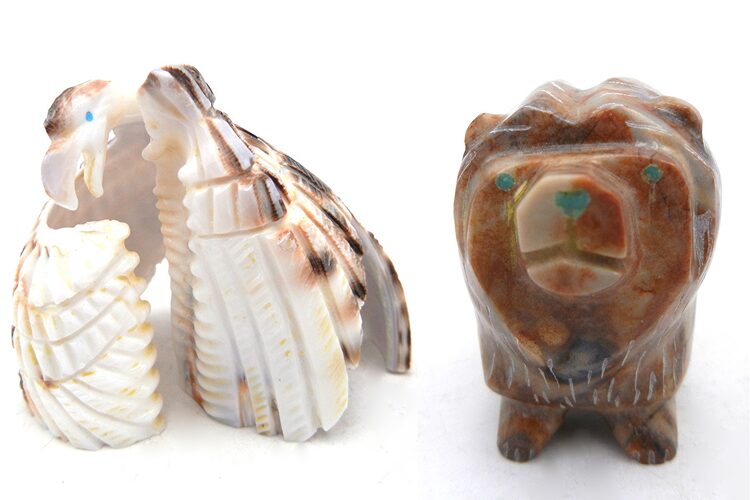
The bear is a symbol of strength, courage, wisdom, and endurance. Revered for its power, the bear is also a deeply introspective and healing spirit, capable of offering support during times of adversity. It helps guide individuals through transitions and challenges with fortitude. A bear fetish is often chosen for inner healing and resilience, particularly when facing emotional or spiritual trials.
Guardian of the Upper Regions (Sky): The Eagle
The eagle acts as a messenger between humans and the heavens. In the Zuni belief, the eagle connects people to the divine, soaring high above the earth and offering a line of communication to spiritual beings, and symbolizes great power, balance, and grace. Those who align with the eagle may be seeking spiritual elevation and clarity.
Guardian of the Lower Regions (Earth): The Mole
The mole, a less visible creature, is deeply connected to the unseen forces beneath the earth. This carving is believed to connect people with ancestors and spiritual guides, enhancing sensitivity to subtle energies and intuitive awareness. The mole teaches introspection, the ability to navigate the unseen, and offers spiritual perception for those who seek quiet wisdom and grounding in the unknown.
Other and Less Common Fetishes
Beyond the six directional guardians, the Zuni people carve many other animals, each infused with distinct symbolic meanings and spiritual properties. These additional fetishes may be chosen for personal protection, healing, connection to nature, or even specific intentions like good luck or rain. Here’s a look at some of the more commonly seen “non-directional” Zuni fetishes and what they represent:
- Frog – Symbolizes water and fertility, and is used in prayers for rain.
- Rabbit – Represents good luck, fertility, and playful trickster energy.
- Snake – Associated with transformation, healing, and life’s hidden mysteries.
- Deer – Embodies grace, gentleness, and harmony with nature.
- Ram – Symbol of strength, assertiveness, and determination in overcoming obstacles.
- Beaver – Represents industriousness, teamwork, and building strong foundations.
- Bighorn Sheep – Stands for agility, balance, and steady progress on difficult paths.
- Elk – Symbolizes stamina, protection, and nobility in leadership.
- Falcon – Represents clarity, precision, and spiritual focus.
- Owl – Associated with wisdom, intuition, and the ability to see hidden truths.
- Horse – Embodies freedom, strength, and the endurance needed for life’s journey.
- Hummingbird – Symbol of joy, vitality, and the uplifting nature of beauty.
- Turtle – Represents patience, longevity, and grounded spiritual protection.
- Lizard – Linked to adaptability, dreams, and spiritual sensitivity.
- Tropical Birds & Dinosaurs – Modern carvings that express artistic creativity and evolving tradition.
While the meaning behind each fetish is central to its spiritual role, the materials and craftsmanship also carry cultural and artistic significance.
Materials, Craftsmanship, and Care
Zuni fetish stone carvings are an ancient art of spiritual significance that continues today, both in religious and cultural contexts, as well as a form of artistic expression. Every fetish is unique; there are no stamp‑presses or assembly lines. Each carver works in their own style, often in a workshop, using a combination of grinding wheels, hand tools, motor‑driven carving tools, and etching tools to bring out the form and details.
Materials often traditionally used include stone or antlers. Among stones, materials such as turquoise, coral, jasper, marble, travertine, serpentine, fossilized ivory, fish rock, pipestone, bone, and elk antler are common. Artists may also incorporate organic or decorative materials like shell (mother-of-pearl), feathers, leather, small beads (heishi beads), and painted or incised heart lines.
A heart line typically runs from the mouth of the animal across the body and is said to represent breath, life force, protection, and good luck, making it both a symbolic and spiritual feature in many Zuni fetishes.
In caring for a fetish, the fetish itself often needs minimal protection; the more delicate or organic attachments, such as leather, feathers, etc., require gentle care: dusted lightly, kept from water, and preserved to maintain shape and look.
How Fetishes Are Treated, Used, and Collected
In Zuni culture, fetishes have both religious/spiritual and practical/cultural roles. They may be passed down through generations; older fetishes are often thought to hold more power and value. They are used for protection—spiritual or physical—to help with healing, fertility, prosperity, to influence the weather, and to guard from harm.
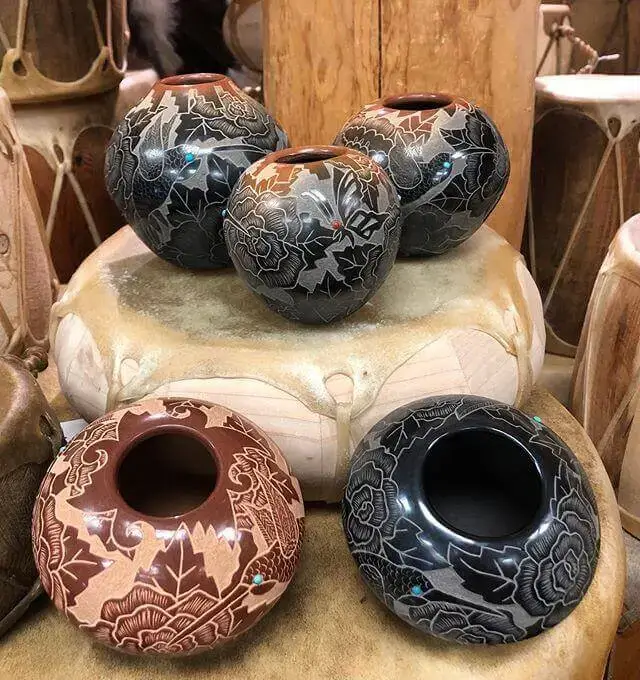
Fetishes may be housed in special places, for example, in handmade pots or pouches, especially for more sensitive ones like the mole, which “doesn’t like light.” Offerings may be made, including ritual feedings, such as cornmeal ceremonially placed through a small hole in the pot.
Collectors value them both for spiritual efficacy and artistic craftsmanship. Many Zuni and Isleta carvers produce carvings for spiritual use, for collectors, and for other tribes; carving is also an important part of the economy. To own a Zuni fetish is to hold a piece of living heritage.
At Palms Trading Company, we are honored to work directly with Native American artists, ensuring that each fetish carving we offer is authentic, ethically sourced, and deeply rooted in tradition. If you would like to learn more about the meaning of Zuni fetishes or find the perfect carving for your collection, our expert staff is here to help.
You can explore our collection online or contact us with questions. We also offer a free personal shopper service to help you find exactly the right piece; simply email us, and we’ll guide you every step of the way.