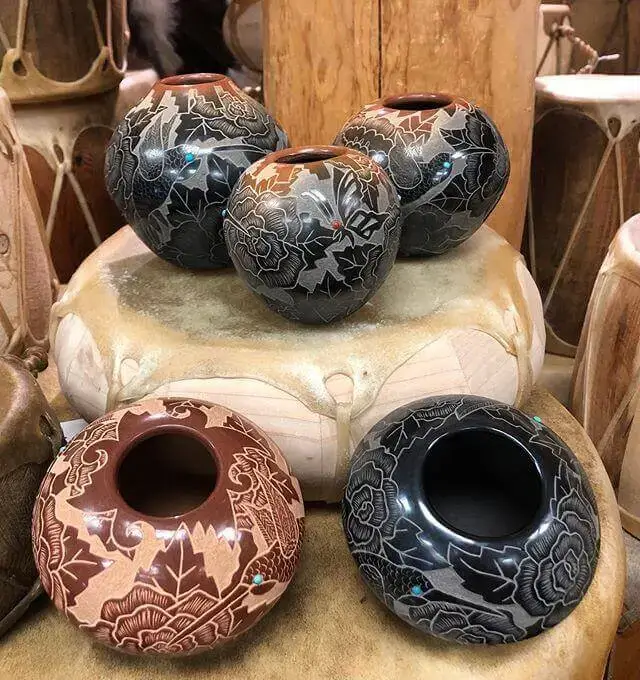




The evolution of Pueblo pottery design reflects a deep and enduring legacy shaped by centuries of indigenous tradition, functional craftsmanship, and artistic expression. From humble clay vessels used for cooking and storage to intricately decorated works of cultural symbolism, Pueblo pottery has long embodied the balance between utility and beauty. These handmade pieces, crafted using methods passed down through generations, continue to resonate with collectors and admirers alike, serving as both historical artifacts and meaningful art forms that tell the story of the Pueblo people.
Pueblo People and Their Origins
A Heritage of Place and Permanence
The Pueblo people, a group of Native Americans residing in the southwestern United States for centuries, derive their name from the Spanish word for “village.” Approximately 20 distinct Puebloan cultures exist, the most prominent being the Hopi in Arizona.
From Nomadic Origins to Crafted Traditions
Originally nomadic until the 14th century, Pueblo people transitioned to permanent adobe or stone dwellings and embraced farming. This shift paved the way for artistic crafts like pottery, stone sculpting, and weaving.
Materials, Techniques, and Craftsmanship
Clay, Temper, and Slip
Pueblo potters use local clay from Arizona, New Mexico, Texas, and northern Mexico, often mixed with sand or crushed sandstone for strength, known as tempers. Surfaces are typically coated with slip to create a smooth, glossy finish before firing.
Hand‑Build and Firing Traditions
All shaping is done by hand via slab or coil methods; surfaces are then smoothed with stones or metal tools, air‑dried, painted with natural pigments, and then fired for several hours. These time‑honored processes have been passed down for over 2,000 years.
Forms and Styles of Pueblo Pottery
Functional to Ceremonial Forms
Beginning as functional items such as pots, seed jars, and water storage, Pueblo pottery evolved into ceremonial vessels like prayer bowls and decorative pieces, including figurines and storytellers. The balance between function and artistry defines its aesthetic.
Seed Pots, Vases, and Figurines
Pueblo pottery includes several iconic forms, among them seed pots, vases, and figurines, each rooted in both utility and tradition. Seed pots, once used to safely store seeds through enclosed forms with only a small opening, are now among the most in-demand Pueblo pottery pieces due to their intricate patterns and compact elegance.
Vases and clay pots, shaped entirely by hand using horizontal coil techniques rather than a wheel, were historically used for storing food and water or cooking, and are still crafted today with artistic flourishes that reflect individual Pueblo styles.
Figurines, while dating back centuries, were discouraged under colonial religious influence and only revived in the 20th century. Today, they are one of the most collected Native American pottery forms, embodying the resilience of Pueblo artistic traditions and the continuation of ancestral storytelling.
Symbolism and Iconography
Nature and Spiritual Symbols
Symbols are central to Pueblo pottery. Here are some of the most prominent ones:
Avanyu, the water serpent, is a powerful symbol of rain and storms. Often shown with lightning from its mouth and flowing, wave-like curves, Avanyu represents water’s life-giving force and the sacred protection it offers the Pueblo people.
Feather motifs are symbolic of prayer and spiritual reflection. Painted or etched onto pottery, they serve as reminders to acknowledge blessings and remain connected to a higher purpose.
The Rain Parrot, commonly featured in Acoma pottery, represents both rainfall and spiritual guidance. Pueblo tradition holds that birds led ancestors to water, making the Rain Parrot a meaningful bridge between nature and the spirit world.
Fine lines symbolize rain, an essential blessing in desert life. These straight, symmetrical designs are often used alongside other natural motifs to express gratitude for the water that sustains crops and communities.
Regional Styles and Traditions
Acoma Pueblo Pottery
Acoma pottery is recognizable by matte polychrome. You’ll typically see this type of pottery with a white background, orange and black geometric patterns, fluted rims, thin walls, and often featuring the Rain Parrot and other weather motifs.
Hopi Pottery
Hopi pottery features brown-red fluid designs on tan clay, painted with yucca brushes. It is fired in open pits using sheep manure or cedar as fuel.
Cochiti Pottery
Known for figurative pottery like storytellers, Cochiti pottery is traditionally polychrome with red interiors and weather motifs.
Santa Clara Pottery
Santa Clara pottery is distinguished by deep-carved blackware and red-carved styles dating from the 1920s. Potters use etching rather than painting and include symbols like the Avanyu and bear paw.
San Ildefonso Pottery
This is the origin of the black-on-black polished pottery style, made famous by Maria Martinez. These pieces feature both matte and shiny finishes.
Jemez Pottery
Jemez pottery features earth-tone matte finishes with painted or etched geometric designs. Friendship pots often include turtles and clay figures.
Santo Domingo (Kewa Pueblo) Pottery
Santo Domingo pottery is known for bold black geometric designs on buff-colored clay. Common forms include bowls, ollas, and storage jars.
Zuni Pottery
Zuni, the largest New Mexican pueblo, produces pottery tempered with shards of rock. Pottery is coated white or red and painted with motifs of frogs, tadpoles, and heartline deer.
Evolution of Designs and Modern Recognition
Historical Progression
Originally utilitarian, Pueblo pottery evolved into artful expressions that reflect cultural narratives and spirituality. Early vessels were simple. Over time, potters began using more intricate patterns and symbols to convey meaning.
Innovations and Continuity
Over centuries, Pueblo potters have refined foundational techniques such as coiling and open-pit firing to create vessels that are both functional and artistic. As methods advanced, they introduced new materials like varied natural clays and pigments, which expanded their color palettes and finishes.
While traditional hand-building remains at the core, many contemporary potters now use modern tools and apply experimental approaches. This has led to a broader range of forms beyond classic bowls and jars, including storytellers, effigy pots, and decorative figurines that blend heritage with creativity.
Global Recognition and Cultural Survival
Acoma pottery originated around 800 CE as a utilitarian tool for storing essentials. It later became central to ceremonies and eventually entered intertribal trade networks. By the late 1800s, it gained international appeal. Today, Acoma pottery continues to reflect cultural resilience, artisan excellence, and supports the economic well-being of modern indigenous communities.
Pueblo Pottery’s Legacy in North American Art
Pueblo pottery has played a vital role in shaping the broader narrative of Native American pottery. Renowned across the Southwest, particularly among Hopi, Zuni, and Acoma communities, its distinctive techniques and geometric symbolism across generations have contributed immensely to the richness of tribal artistry. These handcrafted pieces tell stories through elemental imagery, spiritual iconography, and natural motifs, reinforcing the integration of form and meaning.
In parallel, other pottery traditions like Mata Ortiz, which originates from the ancient Paquimé culture, echo the importance of oral transmission and cultural revival. Though geographically distinct, their shared emphasis on technique preservation and cultural storytelling ensures that indigenous pottery remain both historically rooted and dynamically evolving.
Storytellers – Oral Heritage in Clay
Cochiti Storytellers and Their Origins
Cochiti Pueblo gave rise to storyteller figurines in 1963, initiated by Helen Cordero as an homage to her grandfather, Santiago Quintana. These clay elders, depicted with open mouths and surrounded by children, symbolize storytelling’s central role in Pueblo culture.
Cultural Language and Resistance
The Cochiti people speak Keresan, a language isolate with no relation to any other language and no written form. This makes oral storytelling essential for passing down language, culture, and memory across generations. Storytelling gatherings, often led by elders, were formal occasions that preserved tribal wisdom and history. To honor these moments, Cochiti artists began creating storyteller figurines — physical representations of oral tradition that served as a substitute for writing.
During Spanish colonization, when figurative pottery was suppressed as idolatry, these creations became acts of resistance. The Cochiti played a key role in the Pueblo Revolt of 1680, using pottery to express cultural defiance and restore suppressed traditions.
Technique and Symbolism
Storyteller figurines are handcrafted from local clay, carefully molded, smoothed, and painted with natural pigments. Artists emphasize facial expressions, gestures, and posture to convey the emotion and excitement of oral storytelling. Each figure typically features a seated elder surrounded by children, symbolizing the transmission of wisdom across generations. These expressive elements turn each piece into a visual narrative, with artistry and detail serving as key indicators of its quality and meaning.
Cultural Value and Support
Storytellers preserve heritage, foster unique artistic expression, embody values like wisdom and unity, and support indigenous artists, especially from the Cochiti, Jemez, and Isleta pueblos.
Exhibiting Pueblo Voices
The “Grounded in Clay” Exhibit
When thinking of art exhibits, you may imagine walking through rooms and halls filled with silent artifacts and placards; more like a history field trip than a living cultural journey. However, the Grounded in Clay exhibit offers a much deeper experience.
From July 31, 2022, until June 1, 2025, the exhibition Grounded in Clay has been touring four major U.S. museums; including Santa Fe, New York, Houston, and St. Louis, as part of the celebration of the 100‑year anniversary of the School of Advanced Research’s (SAR) first Pueblo pottery collection. The exhibit reoriented traditional museum narratives by centering the voices and lived experiences of Pueblo communities.
This exhibit marks the centennial of SAR’s Pueblo pottery collection, which was first assembled in 1922. It is also the institution’s first exhibition focused on bridging Pueblo culture and academic research through living narratives. The exhibit shares not only artifacts but also the stories of makers and materials by involving 60 curators from Hopi, Acoma, Jemez, Laguna, Santa Clara, San Ildefonso, and other communities. These include Nora Naranjo Morse, Rose Simpson, Cliff Fragua, Russell Sanchez, Josephine Kie, and Brian Vallo. Since 2008, SAR has actively reimagined how Pueblo pottery is exhibited, promoting collaborative partnerships that stream cultural context directly into artworks.
Collaborative Curation
The exhibit was co-created by the Vilcek Foundation, the School of Advanced Research, and the Museum of Indian Arts and Culture (MIAC), which formed the Pueblo Pottery Collective. This collective, comprising 60 individuals from 21 tribal communities, chose pottery pieces and contributed personal essays, ensuring the exhibition reflected a true cultural dialogue.
Historical Collection Context
The 20th century saw Pueblo pottery collections in New Mexico become fragmented due to poor curatorial practices and institutional divisions between the School of American Archaeology (now the School of Advanced Research) and the Museum of New Mexico. Over time, both institutions built separate collections, leading to a significant split by 1972. The Grounded in Clay exhibit reunites these divided holdings, while also incorporating pieces from the Vilcek Foundation to restore cultural continuity.
Public Programming
The exhibit includes an educational calendar, public and private tours, as well as outreach sessions at SAR, MIAC, and online. These programs highlight Pueblo expertise in materials, making techniques, rituals, and cultural contexts.
Grounded in Clay provides different ways to experience these artifacts:
- Calendar of educational outreach
- Exhibition tours
- Collection tours
The School of Advanced Research also offers public and private programs at their campus, at the Museum of Indian Arts and Culture, where the exhibition is being held, and online.
Honoring Acoma Craftsmanship Through Generations
Acoma pottery is not only visually striking but also rooted in centuries of practical and ceremonial use. Originally created for storing water, food, and seeds, these hand-formed vessels evolved into sacred objects that reflect the spiritual and artistic traditions of the Acoma Pueblo—also known as “Sky City.” Perched atop a mesa west of Albuquerque, this community is one of the oldest continually inhabited Indigenous settlements in the Southwest.
At Palms Trading Company, we have built meaningful, long-standing relationships with Acoma potters over several decades. These partnerships allow us to offer collectors certified, museum-quality pieces that honor traditional methods and cultural significance. Each item is sourced directly from Indigenous artists, ensuring fair trade, authenticity, and respect for the heritage it represents.
Our curated selection of Pueblo pottery—available in store and online—includes work from Acoma masters and other Pueblo communities. Whether you’re drawn to the bold symmetry of a seed jar or the storytelling embedded in figurative designs, each piece we offer comes with a legacy worth preserving.
Continuing the Legacy
Pueblo pottery remains handmade today using techniques refined over centuries, and demand continues to soar thanks to its timeless beauty and cultural significance. The evolution of Pueblo pottery design is not only visible in its forms and motifs but also in the enduring craftsmanship passed down through generations. Each piece you choose isn’t just décor; it is a conversation starter, a bridge to living history, and a priceless addition to any collection.
At Palms Trading Company, we pride ourselves on being more than just a retailer. We are a trusted partner for collectors seeking authentic, handcrafted Pueblo wares. Whether browsing online or visiting our Albuquerque store, you’ll find original works from 21 recognized Pueblos alongside expert guidance that honors their provenance and artistry. Ready to bring a piece of that heritage into your home?
Feel free to contact or email us today, and let us help you discover the perfect item, whether it is an ancient seed pot, a storyteller, or a stunning Acoma vase, supported by our years of experience, certification guarantees, and personal shopper care.