


Native American jewelry encompasses earrings, necklaces, bracelets, and more, each piece often telling a story rooted in the history and culture of Southwest tribes. Materials such as turquoise, spiny oyster shell, sterling silver, and other natural elements are paired in designs rich in symbolism and meaning.
Deep Roots and Cultural Significance
Native American jewelry holds more than visual beauty; it represents history, status, spirituality, and intertribal connection. The importance of jewelry for the Native American population is deeply rooted in tradition, with practices dating back thousands of years. It is shaped by each tribe’s relationship to the land, tied to ancestral histories and legends, and closely connected to religious and spiritual beliefs.
Historically, jewelry was one of the few portable forms of wealth and status available to nomadic communities. The wealth of an individual could be seen in their adornment, which often indicated class and social rank within the tribe. In addition to serving as a personal or spiritual expression, jewelry played an important role in trade between tribes. These exchanges helped spread not just goods, but also jewelry-making knowledge and techniques that contributed to the rich diversity of Native American jewelry traditions.
Southwest Traditions and Tribal Styles
The Navajo Silversmithing Legacy
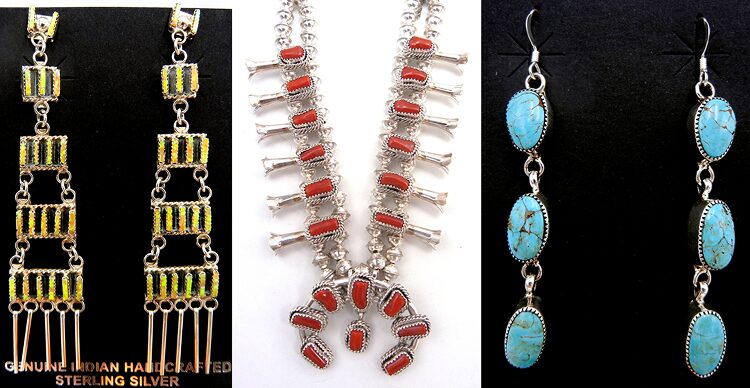
In the mid-1800s, Southwest tribes learned silverworking from European travelers. The Navajo, in particular, adopted and elevated this craft, becoming widely known for their skillful silverwork. Their artistry can be seen in squash blossom necklaces with crescent-shaped najas, featuring stamp work and turquoise. These pieces, often worn by important tribal members, symbolized power and prestige. Another distinct Navajo style is concho jewelry, commonly found on belts and hair accessories, and showcasing repousse silver rosettes.
Navajo jewelry is also recognized for the expert way silver is shaped around stones like turquoise, black onyx, and malachite, especially in rings, bracelets, and necklaces. This combination of stone and metalwork highlights both precision and a deep cultural connection to materials found in the environment.
Zuni Stonework and Inlay Techniques
The jewelry of the Zuni people is rooted in lapidary tradition. Zuni artisans are especially skilled in cutting and shaping stones for inlay work, particularly when creating intricate needlepoint and petit point designs. These stones are precisely set into sterling silver backdrops, forming detailed and recognizable patterns.
Traditional techniques also extend beyond jewelry; Zuni artisans apply the same expert stone-cutting skills to create stone fetishes, which are often carved with symbolic meaning. Whether in adornment or carving, Zuni craftsmanship is marked by precision, storytelling, and respect for natural materials.
Hopi Silver Overlay Designs
Hopi jewelry also showcases artistry in silversmithing. However, unlike the Navajo, Hopi styles often consist of silver alone, without the addition of stones. Their hallmark technique is overlay, in which intricate patterns are cut into a silver sheet and layered over a darker, oxidized silver base, resulting in bold, high-contrast designs.
Common symbols include rain clouds, corn stalks, and prayer feathers, which are visual elements tied to spiritual themes and natural balance. This technique is commonly seen in earrings and cuffs, which are often adorned with a smooth, characteristic silver sheen that reflects the precision and symbolism of the pattern beneath.
Spiritual and Social Importance of Jewelry
Native jewelry is more than decoration: It embodies spiritual beliefs, social hierarchy, trade relationships, and storytelling traditions. For some tribes, specific jewelry forms are reserved for ceremonies or leaders. The portability of jewelry made it critical not only as a status symbol but as trade goods that carried cultural knowledge across regions.
Authenticity and Ethical Purchasing
When purchasing Native American jewelry, it is extremely important to check the provenance of the piece and confirm its authenticity. The market is flush with knockoffs, but a reputable retailer will be able to affirm the origins of the piece you are considering. Ask about how the stones were treated, whether they’ve been stabilized or enhanced with color-boosting chemicals, as vendors are legally required to disclose this information. Understanding both the source and condition of the materials ensures you’re investing in a genuine and respectfully made piece.
How to Explore Authentic Native American Jewelry
The importance of jewelry for Native Americans is deeply rooted in tradition, storytelling, and artistic expression. Each piece reflects generations of cultural knowledge and individual craftsmanship. At Palms Trading Company, we take pride in offering a wide selection of authentic Native American jewelry that honors these traditions and supports Indigenous artists.
Our curated collection features breathtaking rings, necklaces, bracelets, and more, each made with materials such as turquoise, silver, spiny oyster, and other traditional elements. Whether you’re adding to a growing collection or selecting your first piece, our personal shopper service will help you find jewelry that resonates with your style and values.
To browse our current offerings or receive assistance with a specific piece, contact Palms Trading Company online or call us directly at 1 (800) 748-1656. We’re here to ensure you receive a meaningful, handcrafted piece that reflects the true artistry and cultural significance of Native American jewelry.