


A Legacy of Culture and Craftsmanship
Native American jewelry is more than adornment; it is an evolving art form rooted in cultural identity, generational skill, and spiritual expression. The evolution of Native American jewelry styles reflects centuries of adaptation and innovation, with artisans from tribes such as the Navajo, Zuni, Hopi, and Santo Domingo (Kewa Pueblo) developing unique techniques and materials that express their values, environments, and traditions. From traditional turquoise pieces to contemporary innovations, Native American jewelry continues to inspire collectors and admirers worldwide.
Zuni Jewelry: Mastery in Detail and Inlay
Zuni Petit Point Jewelry
Zuni petit point jewelry showcases the incredible precision of Zuni artisans. These pieces feature small, finely cut stones, typically turquoise, arranged in delicate, symmetrical patterns and set in sterling silver. Each design reflects the artist’s skill in creating detailed, balanced layouts that blend tradition with elegance.
Zuni Needlepoint Jewelry
Closely related to petit point, Zuni needlepoint jewelry uses slender, needle-like stones carefully placed in symmetrical, geometric arrangements. Common materials include turquoise and coral. The fine lines and sharp angles create bold yet refined designs that continue to captivate jewelry lovers.
Zuni Inlay Jewelry
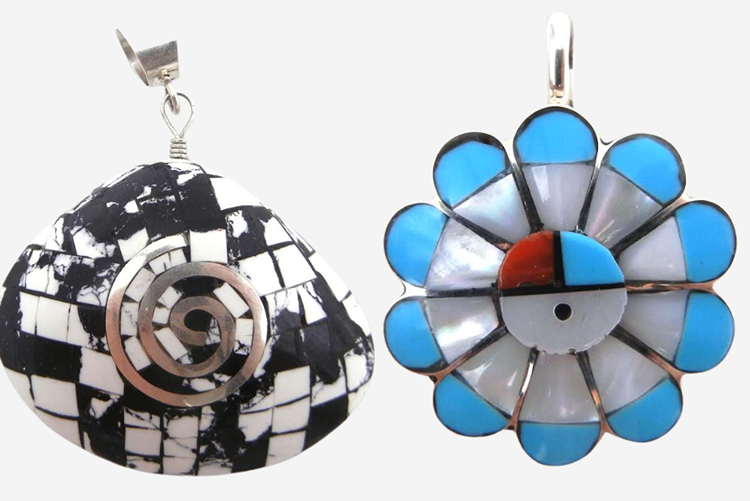
Perhaps the most iconic Zuni technique is stone inlay. Artists cut and fit colorful stones, such as turquoise, coral, mother of pearl, and jet, into carved grooves within silver to create flat, mosaic-like surfaces. These vibrant inlays often depict animals, cultural symbols, or geometric forms, allowing each piece to tell a story rooted in Zuni heritage.
Navajo Jewelry: Bold Silverwork and Cultural Motifs
The Navajo people are master silversmiths, known for bold, expressive designs that incorporate traditional Navajo jewelry symbols, turquoise stones, and detailed metalwork. Common techniques include hand-stamping, floral motifs, silver leaves, and sandcasting. One of the most iconic Navajo creations is the squash blossom necklace, an elaborate silver-beaded necklace often featuring turquoise and a crescent-shaped Naja pendant.
Contemporary Navajo artists continue to evolve these techniques, blending geometric patterns and vibrant stones in bold new ways while honoring their tribal heritage.
Santo Domingo (Kewa Pueblo) Jewelry: Heishi Beads and Mosaic Inlay
Santo Domingo artists are renowned for their heishi beads, tiny disc or tube-shaped beads made from shell, bone, or stone. These are often strung into necklaces or used in layered jewelry pieces with bold color patterns. The tribe is also recognized for its mosaic inlay jewelry, where fragments of stones or shells are laid onto a base material (often shell or bone) to create striking designs.
These methods not only reflect generations of craftsmanship but also carry deep cultural symbolism tied to the natural world and ancestral tradition.
Hopi Jewelry: Spiritual Symbols in Silver Overlay
Hopi jewelry is defined by its silver overlay technique. Artists cut symbolic designs into a top layer of silver, then solder it onto a darker oxidized background. Common symbols include the water wave, which signifies life and continuity, and kachina figures, representing ancestral spirits. This technique produces high-contrast, deeply meaningful designs rooted in Hopi spiritual beliefs and connection to the land.
Jewelry Across Native American Cultures: Shared Elements and Exchange
Though each tribe has a distinct style, many share foundational elements such as the use of turquoise, coral, jet, and silver. The introduction of silversmithing by Spanish settlers in the 1800s brought new tools and techniques that were embraced across Southwestern tribes. Natural materials like bone, feathers, and shell also play a common role in traditional adornment.
Historically, jewelry served practical and spiritual functions. It was used for trade, spiritual protection, and to denote status within the tribe. Today, it remains central to tribal economies, art, and cultural expression.
The Influence of Culture on Contemporary Native American Jewelry
Modern Native American jewelry honors ancestral techniques while embracing innovation. Contemporary artists experiment with new materials, colors, and forms, creating pieces that speak to both personal identity and collective memory.
Symbolism remains central to design. Motifs such as the bear, Kokopelli, and thunderbird are infused with meanings tied to strength, fertility, and protection. By incorporating these into their work, artists connect each piece to a broader spiritual and cultural context.
Whether it’s the vivid beading of Santo Domingo, the silver overlay of the Hopi, or the inlay work of the Zuni, contemporary Native American jewelry reflects a living tradition, one that evolves while staying deeply rooted in heritage.
Caring for Native American Jewelry
To preserve the beauty and craftsmanship of Native American jewelry, proper care is essential, especially for intricate pieces like Zuni inlay, petit point, or Santo Domingo beadwork. Store jewelry in cool, dry spaces, ideally in zip-top bags to prevent tarnish. Loose stones should be professionally reset.
For more complex restoration, it’s best to consult a professional familiar with Native American techniques. Palms Trading Company can connect collectors with trusted artisans for repairs.
Where to Find Authentic Native American Jewelry
Palms Trading Company offers an extensive selection of authentic Native American jewelry from Navajo, Zuni, Hopi, and Santo Domingo artists. Every piece is sourced directly from artisans or their families, ensuring authenticity and respect for cultural heritage. Whether you’re a collector or first-time buyer, our knowledgeable staff can help you find the perfect piece that reflects the artistry, tradition, and evolution of Native American jewelry styles through generations of craftsmanship and innovation.
Contact us today to explore our collection or speak with a personal shopper who can guide you to a piece that honors tradition and tells a story worth wearing.