


Understanding Navajo Pottery begins with recognizing it as one of the most enduring and culturally significant art forms of the American Southwest. Crafted using techniques passed down across generations, each piece reflects the Navajo people’s deep relationships with land, tradition, spirituality, and community. Collecting and caring for Navajo pottery allows individuals to engage directly with this living cultural heritage while supporting the preservation and continuation of Indigenous artistry.
The Cultural Role of Pottery in Navajo Life
Traditional Navajo pottery has historically served both practical and ceremonial purposes. Vessels were used to store food and water, prepare meals, and hold sacred items during rituals. Beyond utility, pottery functions as a visual language that communicates cultural identity, spiritual beliefs, and community memory. Pottery-making is often taught by elders to younger generations, reinforcing tribal knowledge and preserving artistic traditions.
A Brief History of Navajo Pottery
Navajo pottery has been produced for hundreds of years, traditionally crafted for both household and ceremonial use. Historically, most Navajo pottery was undecorated, emphasizing form, function, and surface treatment rather than symbolic imagery. In the late nineteenth century, railroad expansion introduced tourism to the Navajo region, contributing to pottery’s development as a recognized art form.
Traditional Materials and Pottery Construction
Navajo potters traditionally gather natural clay from regions across northwestern New Mexico, Arizona, and Utah. Clays are mixed with water and sand to create a workable medium. Unlike many other pottery traditions, Navajo artists do not use wheels. Instead, vessels are formed through hand-coiling, where long coils are stacked and smoothed into shape.
Pine Pitch Finishing and Surface Treatment
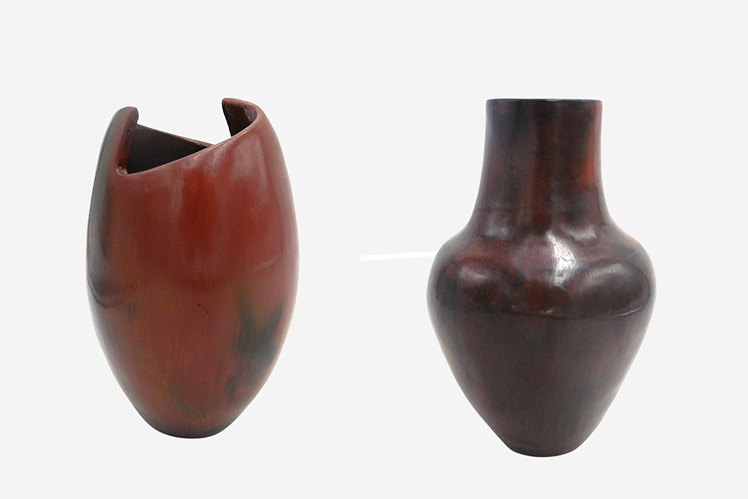
One of the most distinctive features of Navajo pottery is the application of pine pitch, a melted sap derived from piñon trees. Applied after firing and before cooling, pine pitch creates a glossy sheen and seals the vessel. This finish contributes to the pottery’s deep coloration while honoring traditional methods.
Minimalist Design and Cultural Privacy
Traditional Navajo pottery is intentionally minimalist. Most pieces feature no painted designs or symbolic imagery. Navajo elders discourage the inclusion of cultural symbols on pottery in order to protect sacred knowledge and maintain privacy. Color palettes tend to be earthy and subdued, reflecting the natural environment from which materials are sourced.
Common Types of Navajo Pottery
Navajo Coiled Pottery
Navajo coiled pottery features smooth surfaces created through layered coils and careful scraping. Pine pitch is often applied, resulting in a glossy appearance suitable for decorative display.
Navajo Carved Pottery
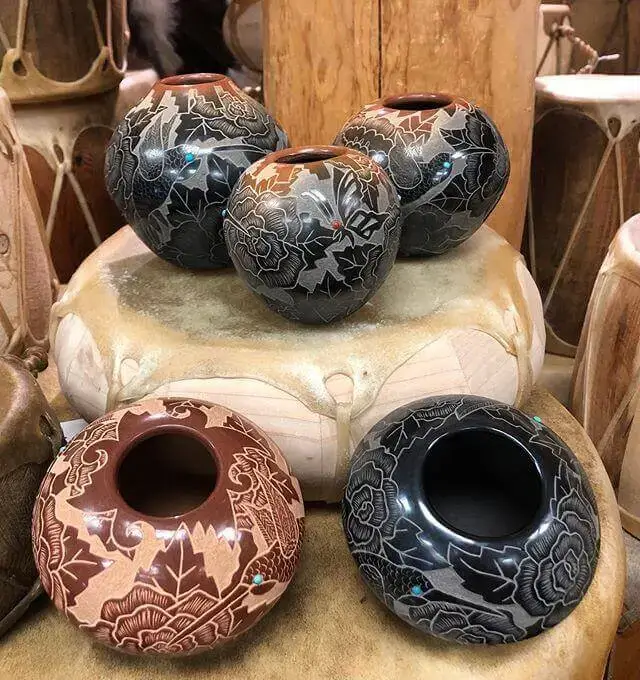
Carved Navajo pottery begins with traditional coiling, followed by carving or etching before firing. These pieces are less common and often differ from strictly traditional forms, yet still rely on foundational Navajo techniques.
Identifying Authentic Navajo Pottery
Authentic Navajo pottery exhibits consistent craftsmanship, smooth surfaces, and hand-coiled construction. Artists typically sign their work, and legitimate pieces often include documentation verifying origin. Counterfeit pottery may display uneven thickness, sloppy finishes, irregular shapes, or pricing that seems unusually low.
Certificates of Authenticity and Provenance
A Certificate of Authenticity confirms the identity of the artist, while a Letter of Provenance documents ownership history. Both are important tools for verifying legitimacy, especially when purchasing antique or high-value pieces.
Collecting Antique Navajo Pottery
Antique Navajo pottery provides historical insight into earlier techniques and materials. Signs of age, including patina or wear, often enhance value. Collectors are encouraged to research provenance and consult experts when acquiring older pieces.
Cleaning and Caring for Navajo Pottery
Proper Handling and Preparation
Always handle pottery with clean, dry hands and support vessels with both hands. Protective cloths or mats should be used beneath pieces to avoid damage to the artist’s signatures.
Safe Cleaning Techniques
Navajo pottery should never be submerged in water or cleaned with wet cloths. A feather duster is recommended for removing dust. Sliding or spinning pottery on its base should be avoided.
Long-Term Preservation Tips
Pottery should be stored away from direct sunlight, moisture, and high-traffic areas. Displays should be rotated periodically, and padding should be used during transport.
Decorative Use Versus Functional Use
Most Navajo pottery is decorative and should not be used as functional vessels unless explicitly stated. Exposure to water or daily use can compromise structural integrity.
Contemporary Navajo Pottery and Innovation
Modern Navajo artists continue to honor traditional techniques while experimenting with new materials, firing methods, and forms. This balance keeps the art form relevant while respecting cultural foundations.
Preserving Navajo Pottery Traditions
Preservation efforts include workshops, mentorship programs, exhibitions, and educational outreach. Supporting authentic artists and reputable dealers plays a key role in sustaining these traditions.
Authentic Navajo Pottery from Trusted Artisans
At Palms Trading Company, we work directly with Native American artists to offer authentic Navajo pottery rooted in cultural knowledge and traditional craftsmanship. With decades of experience sourcing directly from artisans, our collection reflects the depth and integrity essential to understanding Navajo pottery as a cultural art form.
Whether you are new to collecting or seeking a specific piece, our knowledgeable team can assist you in selecting pottery that aligns with your interests, space, and appreciation for cultural heritage. For a more personalized experience, our personal shopper service provides one-on-one guidance tailored to your preferences.
To gain deeper insight into the values that guide our relationships with Native artists, we invite you to learn more about our mission and our commitment to cultural respect and authenticity.
If you have questions about available pieces, provenance, or care, please contact or email us today. Our team is always happy to help you explore authentic Navajo pottery with confidence and care.