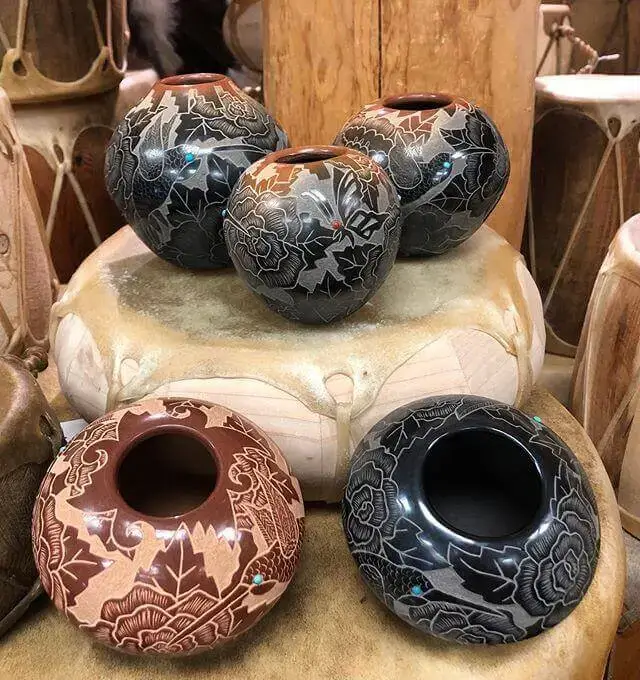



The American Southwest is a land of ancient mysteries and rich Indigenous history, and Acoma Pueblo is a place that beautifully encapsulates this heritage. Acoma Pueblo pottery is one of the most celebrated forms of Native American art, steeped in a history that spans centuries and echoes the ancestral voices of one of North America’s oldest continuously inhabited communities. The depth of Acoma Pueblo pottery history reflects a legacy of cultural endurance, artistic mastery, and spiritual meaning.
Origins and Cultural Significance
Acoma Pueblo (“Sky City”)
Located roughly 60 to 72 miles west of Albuquerque, New Mexico, Acoma Pueblo comprises four communities: Sky City (Old Acoma), Acomita, Anzac, and McCartys. This sacred area has been inhabited for over 2,000 years and continues to serve as the heart of Acoma identity. The region lies within the Mogollon mountain area, a landscape that has shaped and inspired Acoma craftsmanship for millennia.
Ancestral Lineage
Before exploring the techniques and traditions of the pottery itself, it’s important to understand the ancestral roots from which this artistry was born. The Acoma people trace their lineage to the Ancestral Puebloans, an ancient civilization from the Four Corners region. This term has largely replaced “Anasazi,” a term that has been discouraged due to its negative Navajo origin, meaning “ancient enemy.” These ancestors, active from 800 CE to 1300 CE, likely dispersed due to environmental and conflict-related pressures, giving rise to communities like Acoma and Hopi.
Etymology: The Name “Acoma”
The name “Acoma” comes from the Keresan language, with interpretations such as “aak’u,” meaning “white rock,” and “haaku,” meaning “a place prepared.” These interpretations point to the deep ties between the Acoma people and their environment, reflecting either the mesa’s pale rock or the Pueblo’s divine preordination.
The Pottery Tradition Through Time
Functional Beginnings
Historically, Acoma pottery was utilitarian: large vessels for cooking, jugs for water, seed jars for storage, and effigy pots for ceremonial use. These items were hand-shaped, painted, and fired using materials sourced from their landscape. While originally designed for daily utility, such as storage vessels, cooking pots, and ceremonial effigies, Acoma pottery has transformed over the centuries into a revered art form. Though still crafted using ancient methods, today’s pieces function more as artistic and cultural heirlooms than everyday tools.
Black-on-White and the Matriarchs
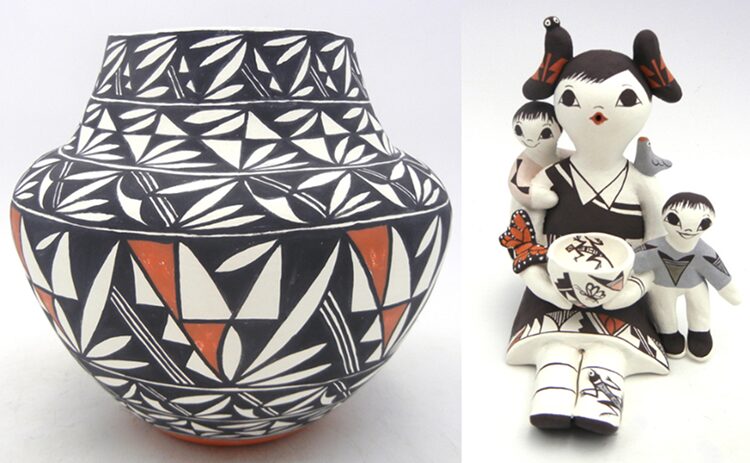
Acoma’s iconic black-on-white pottery likely evolved from the traditions of the Ancestral Puebloans. Following the Pueblo Revolt and Spanish colonization, access to certain glazes waned, prompting the development of a matte finish. Marie Z. Chino, Lucy Lewis, Jessie Garcia, and Juana Leno are credited with preserving and revitalizing traditional methods through the 20th century.
Polychrome Evolution
Though black-on-white remains classic, modern Acoma pottery incorporates hues of red, orange, and earthy tones. These adaptations reflect both artistic evolution and market demand, but the traditional hand-coiling and firing methods have largely endured.
For generations, Acoma pottery has evolved into a deeply symbolic expression of identity and connection to their ancestral homeland. Each custom piece carries stories, spirituality, and traditional wisdom. Because of its intricate techniques and decorative uniqueness, Acoma pottery remains one of the most admired and recognizable styles of Indigenous North American pottery.
Crafting Techniques & Materials
Acoma pottery is created using a unique gray or white clay found locally, often strengthened with ground-up pottery shards (temper). The coiling technique, which involves shaping and building vessels with snake-like ropes of clay, is followed by smoothing with a rock or shell. Artists apply a kaolin-based slip to enhance the surface, then paint intricate designs with brushes made from yucca leaves. Traditional firing is done in outdoor pits with manure to intensify colors.
Design Elements & Symbolism
Signature traits of Acoma pottery include thin walls, fluted rims, and a smooth, matte finish. Designs use black mineral paint on white or cream backgrounds. Common motifs on pottery pieces include the following:
- Hatching patterns representing rain.
- Swirls and spirals symbolizing wind and water.
- Birds, especially parrots and rainbirds, indicating prosperity.
- Clouds, rainbows, and thunderbirds, reflecting mythological and natural reverence.
These symbols reflect the Acoma people’s close relationship with their environment, especially the importance of rain in desert agriculture.
Continuity & Modern Evolution
Today, Acoma pottery is as much about cultural preservation as artistic innovation. While modern potters experiment with color and style, many maintain the hallmarks that define Acoma heritage. Palms Trading Company plays an essential role in this continuity by sourcing directly from Acoma artists, ensuring each piece is authentic and fairly traded.
The Acoma people have withstood centuries of upheaval, ranging from Spanish colonization to modern governance, yet their commitment to preserving traditional practices and community identity remains unwavering. Acoma pottery stands as both a creative and cultural testament to their resilience.
Exploring & Acquiring Authentic Pieces
At Palms Trading Company, we are honored to curate a collection of authentic Acoma Pueblo pottery and other Native American art pieces. Each piece is thoughtfully made by talented indigenous artists and carries centuries of history, symbolism, and ancestral knowledge.
Whether you seek a practical olla, a ceremonial seed jar, or a vibrant polychrome masterpiece, our personal shoppers are ready to guide you and answer any questions you have about Acoma Pueblo pottery history. Discover the piece that resonates with your story and enriches your space. Contact or email us today to begin your journey with truly meaningful Native American artistry.