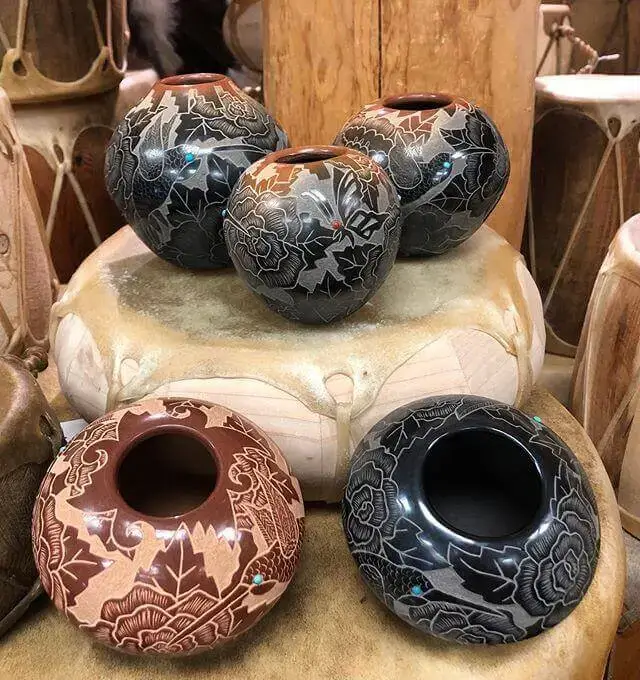



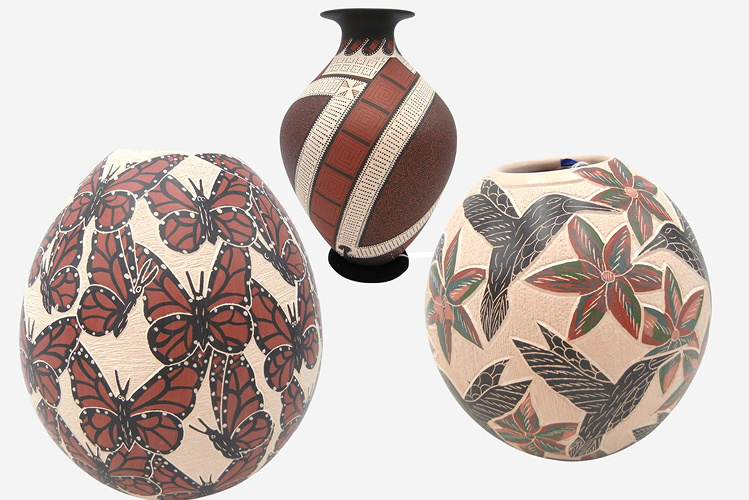
Mata Ortiz pottery is a distinctive ceramic tradition originating in the village of Mata Ortiz, located in the Mexican state of Chihuahua. The history of Mata Ortiz Pottery reflects a tradition shaped by both ancient influence and modern revival, sustained through hands-on learning and shared knowledge. Known for its fine linework, complex geometry, and deeply rooted cultural practices, this pottery style is admired globally for its craftsmanship, individuality, and the way it preserves oral tradition through art.
The Origins of Mata Ortiz Pottery
The origins of Mata Ortiz pottery trace back to ancient Mogollon and Casas Grandes traditions. Archaeological remnants discovered at Paquimé reveal that pre-colonial inhabitants were highly skilled potters, whose techniques and designs influenced generations to come. Although these ancient works lay dormant for centuries, their rediscovery inspired a new movement in the twentieth century.
Juan Quezada and the Revival of a Lost Art
A Self-Taught Pioneer
The revival of Mata Ortiz pottery began with Juan Quezada Celado, a railroad worker who became fascinated by ancient pottery fragments found near Paquimé during the 1950s through the 1970s. Without formal training, Quezada taught himself to replicate these ancient styles through experimentation, persistence, and trial and error failure. Over time, he developed his own techniques and visual language rooted in historical forms.
Sharing Knowledge Through Community
Quezada shared his knowledge freely with family members and neighbors, encouraging others to learn the craft regardless of gender or background. This openness led to pottery becoming the most common profession in Mata Ortiz today. His work eventually gained international attention, aided by anthropologist Spencer MacCallum, and Mata Ortiz pottery became recognized worldwide.
Oral Tradition and Cultural Identity
Oral tradition plays a vital role in Mata Ortiz pottery. Techniques, stories, symbolism, and community history are passed from generation to generation through apprenticeships, family teaching, and storytelling. This process preserves not only technical skill but cultural memory and identity.
Materials and Pottery Construction
Mata Ortiz pottery begins with naturally occurring clay gathered from nearby regions such as Chupaderos. The clay is processed and mixed with minerals, sand, and sometimes plant fibers or stones to achieve specific textures and colors.
Potters do not use wheels or mechanical tools. Instead, clay is rolled into thin sheets, cut into strips, and coiled by hand to form vessels. Interior and exterior walls are scraped smooth, shaped carefully, and left to dry before firing.
Tools Used in Mata Ortiz Pottery
Despite the intricate detail and precision of the finished pieces, the tools Mata Ortiz pottery relies on minimal and resourceful tools. Artists use wooden paddles, stones, abrading tools, and needlepoint sticks. Fine brushes are often made from human hair or animal fur, sometimes using as few as two strands, to create exceptionally thin painted lines.
Firing Techniques and Surface Finishing
Mata Ortiz pottery is traditionally fired twice using carefully controlled methods. The first firing, known as bisque firing, strengthens the overall structure. After painting and decoration, a second firing occurs at higher temperatures, allowing pigments and surface treatments to bond with the ceramic body.
Some potters fire their work in open pits or improvised enclosures using wood or cow dung, producing distinctive surface variations and smoky finishes.
Designs, Symbolism, and Visual Language
Mata Ortiz pottery is known for intricate geometric patterns, animal imagery, and symbolic motifs. Many designs trace their roots to pre-colonial Paquimé traditions, while others incorporate spiritual themes, desert wildlife, and natural elements. Artists often blend ancient motifs with personal interpretation.
Each piece is unique, reflecting the hand of the individual artist and the freedom encouraged within the tradition.
Why Mata Ortiz Pottery Is Decorative, Not Functional
Mata Ortiz pottery is made from non-refractory clay and is not designed for cooking or exposure to extreme temperature changes. These pieces are unglazed and fired at lower temperatures, making them suitable for display rather than functional use.
Mata Ortiz Pottery Today
Today, Mata Ortiz pottery is collected worldwide and displayed in galleries and museums. Artisans regularly attend international exhibitions, conferences, and workshops, continuing to share their stories and techniques. The tradition remains vibrant, evolving while staying rooted in its origins.
Authentic Mata Ortiz Pottery and Artisan Tradition
Palms Trading Company works directly with Mata Ortiz artisans to offer authentic, hand-crafted pottery created through generations of skill and cultural continuity. Each piece reflects the History of Mata Ortiz Pottery, carrying forward the techniques, symbolism, and personal expression of its maker. At Palms Trading Company, every work is selected with attention to authenticity and respect for tradition.
For those seeking guidance when selecting a piece, our personal shopper service provides one-on-one assistance tailored to individual preferences, collecting goals, and available works. This personalized approach supports informed decision-making while honoring the artistic process behind each piece.
To learn more about the values that guide our work with artisans, we invite you to learn more about our mission and the long-standing relationships built on trust and cultural respect. If you have questions about authenticity, availability, or pricing, contact or email us today, and our team will be glad to assist.