


Why Real Turquoise Matters
Turquoise has captivated cultures for thousands of years, cherished for its vibrant blues and greens and deeply rooted spiritual meaning. From the ancient Egyptians to Native American artisans, and now to modern collectors, the power of real turquoise jewelry lies not only in its beauty but in its cultural and symbolic legacy. Today, in a market flooded with imitations, understanding how to identify, care for, and evaluate genuine turquoise is more important than ever to preserve its true worth.
Cultural Significance and Global History
Turquoise occurs naturally in several regions of the world, which contributes to its diversity in both color and cultural symbolism. This stone has appeared in art, adornment, and ceremonial objects for over 5,000 years. Ancient Egyptians used it in jewelry and tomb artifacts. The Persians valued turquoise as a symbol of protection and introduced it to Medieval Europe. In Ancient China, it was often seen in decorative pieces.
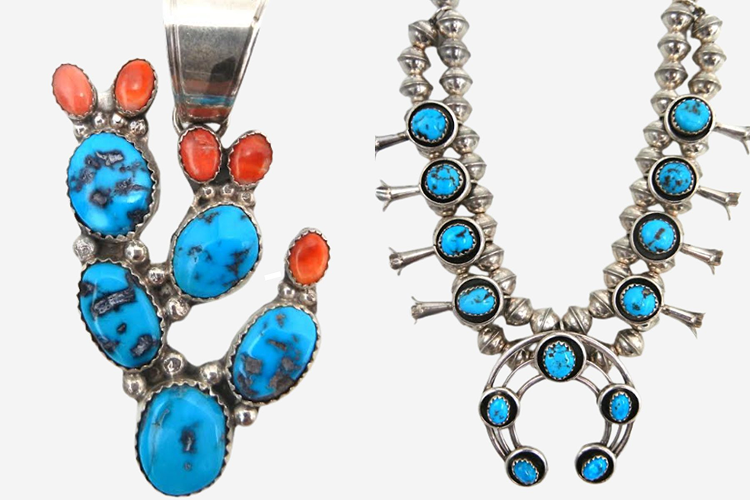
Among Native American tribes, turquoise has long been viewed as sacred and protective. It is used to symbolize peace, spiritual clarity, and immortality, often set in silver. The Navajo people, in particular, created one of the most iconic turquoise pieces: the squash blossom necklace. Designed in the late 1800s, it continues to signify status and prestige; the larger the necklace, the greater the wearer’s perceived influence.
What Determines Turquoise Value?
1. Scarcity of Natural Sources
The value of real turquoise is increasing due to the rapid depletion of turquoise mines. For example, New Mexico’s historic Cerillos mine, once central to Pueblo use in the 1800s, is no longer in operation. Rising mining costs and environmental limits have forced other closures as well. To meet demand, many countries export cheaper turquoise that has been stabilized using epoxy.
Stabilization helps low-quality turquoise become harder and more vibrant, but it’s still considered altered. It is believed that over 90 percent of the turquoise in circulation today has been modified in some way.
2. Geological Rarity
Turquoise requires a rare combination of dry, arid climate and mineral-rich soil. It forms only in areas where copper, phosphorus, and aluminum coexist in the host rock, making it regionally rare and geologically special.
3. Grading by Color, Porosity, and Matrix
- Color: High-value turquoise has a clear, vibrant color, often a rich sky blue. Cloudy or murky tones lower the stone’s desirability.
- Porosity: Less porous stones are harder and more stable, rating between 5 and 6 on the Mohs scale. Highly porous turquoise is softer and prone to damage or fading.
- Matrix: This refers to the visible host rock (limonite or sandstone) in which turquoise forms. No matrix is most valuable, but a delicate spiderweb matrix is also prized.
4.Types and Their Market Value
- Cabochons: $15–$25/gram (cut and polished turquoise used in most jewelry)
- High-Quality: $1,500–$25,000/gram (low porosity, no matrix, vivid color)
- Blue Lander Spiderweb: Rare, Nevada-mined turquoise, same value range as above
- Raw Natural Turquoise: $5–$50/gram
- Stabilized Turquoise: $15–$125/gram
- Purple Mojave (dyed, crushed, epoxy-bound): ~$0.50/gram
Is Your Turquoise Authentic? How to Tell
Identifying the Real Thing
When examining a stone, there are several indicators of authenticity:
- It feels hard and has weight
- The color is natural, not overly bright
- There is no plastic-like shine or texture
- The matrix appears naturally integrated, not painted or added
- It doesn’t melt or release odor when heated (as fakes often do)
Sleeping Beauty turquoise (no matrix, soft blue tone) and Kingman turquoise (sky blue to green with matrix) are common and desirable types in the Southwest.
Debunking the Magnetic Myth
One widespread myth is that real turquoise is magnetic. In fact, turquoise has no magnetic properties because it lacks ferromagnetic materials like iron or nickel. If a “turquoise” stone reacts to a magnet, it likely contains other materials or is fake.
Some imitation stones, like dyed howlite or magnesite, can contain magnetic additives or iron-rich fillers to simulate weight or appearance.
Why Your Turquoise Might Change Color
Real turquoise is porous, meaning it can absorb oils, chemicals, and water. Over time, exposure to lotions, sweat, sunlight, and even beauty products can cause color shifts, especially in untreated stones. Blue stones may turn greener or duller.
Stabilized turquoise resists these changes better, but still requires care. In contrast, dyed stones or imitations like howlite may fade or turn white entirely, revealing their true composition.
How to Care for Turquoise Jewelry
To preserve the beauty and value of your turquoise jewelry:
- Avoid exposure to water, oils, perfumes, and household cleaners
- Remove turquoise pieces before cleaning, sunbathing, or applying lotion
- Store each piece separately in sealed zip-top bags in a cool, dry, dark area
- Avoid latex or wool gloves when wearing turquoise rings
- Clean with a soft, non-abrasive cloth only; never soak turquoise
- Use silica packets or activated charcoal to absorb moisture during storage
When to Seek Professional Help
If your turquoise appears discolored or damaged, consult a certified gemologist before attempting any DIY repairs. Professional restoration can revive color without risking further harm.
Where to Buy Authentic Turquoise Jewelry
At Palms Trading Company, we guarantee the authenticity of every turquoise piece. Our buyers work directly with Native American artisans, ensuring both ethical sourcing and cultural respect. Whether you’re shopping online or in our Albuquerque store, our team offers decades of expertise and personal shopper assistance to help you find a piece that matches your style and values, while honoring the true power of real turquoise jewelry through craftsmanship, tradition, and meaning.
Contact us today to discover our collection of authentic turquoise jewelry and let us help you find a piece that carries the story, spirit, and legacy of Native craftsmanship.