


A Man’s Guide to Turquoise Jewelry is more than just a look at accessories; it’s an exploration of one of the most storied gemstones in human culture. Turquoise’s striking blue and green hues have captivated civilizations from ancient Egypt to the American Southwest. For Native American tribes, especially the Navajo, Hopi, and Zuni, turquoise is deeply tied to cultural identity, spirituality, healing, and artistry. From the earliest turquoise rings and bracelets to the skilled silversmithing that emerged in the 1800s, men’s turquoise jewelry carries both historical weight and modern style. This guide explores not only the origins and meanings behind these pieces but also how they are worn, styled, and cared for today, giving you a deep appreciation for their cultural and artistic value.
The Origins of Turquoise and Why It Matters
Turquoise is not a stone you find everywhere; its existence depends on specific environmental conditions that are both rare and ancient. This semi‑precious stone forms deep beneath the Earth’s surface when mineral‑rich hydrothermal fluids interact with limestone or sandstone over countless years. As copper, aluminum, phosphorus, and trace elements come together under the right pressure and temperature, they slowly crystallize into the unique blue‑green stone people have valued since antiquity.
This geological rarity gives turquoise its special place in jewelry, particularly in the American Southwest, where indigenous communities first began creating ornamental and symbolic pieces. The complexity of its formation, requiring dry climates and specific mineral compositions, makes turquoise comparatively rare and has enhanced its desirability across cultures.
Matrix and Natural Characteristics
If you look closely at a piece of turquoise, you’ll sometimes see intricate patterns, dark veins, or web‑like streaks running through the stone. These patterns are known as the matrix, and they tell a story about the stone’s geological journey. The matrix comes from the original host rock, often limestone or sandstone, that surrounded the turquoise as it was forming. Limestone produces rich, darker brown patterns, while sandstone leaves lighter tan markings. These unique variations are part of what makes natural turquoise so prized: no two stones are exactly alike, and their matrix gives each gem a fingerprint of its own origin.
Why Turquoise Is Rare
Unlike diamonds or quartz, which are found in many locations worldwide, turquoise requires a much narrower set of geological circumstances. Only specific regions, such as the arid Southwest of the United States, parts of Iran, and certain desert climates, possess the environment needed for turquoise to form. Historically, many American mines produced beautiful, high‑quality turquoise, but over time, they have become depleted. For example, the Cerrillos mines near Santa Fe, New Mexico, were once abundant sources for Native artisans, but they eventually ran dry. As these mines dwindled, the availability of natural turquoise decreased, which has contributed to both its value and the increasing use of stabilized stones in jewelry.
Turquoise in Native American Culture
Long before silversmithing, turquoise held spiritual importance among Native American tribes. It was worn for protection, carried into battle, hung in homes to ward off harm, and used to attract prosperity and good fortune. The stone’s connection to the sky and water tied it symbolically to life, balance, and health.
The Introduction of Silversmithing
Silversmithing was not originally a Native American craft; it was introduced by Spanish settlers in the 1800s. As Spanish silversmiths entered the Southwest, they brought new tools, techniques, and designs that dazzled the local tribes. One Navajo blacksmith, Atsidi Sani, was determined to learn the art of working with silver. After convincing a Spanish artisan to teach him the craft, he mastered it and later passed that skill on to his sons and other community members. This marked a turning point in Native jewelry traditions: the fusion of traditional stones like turquoise with silver settings created a new artistic expression that would become iconic in Native American jewelry.
A Global Stone with Ancient Roots
Turquoise’s allure extends far beyond the American Southwest. Civilizations such as ancient Egypt and Persia prized turquoise centuries before Native Americans did. In Egypt, turquoise appeared in royal jewelry, amulets, and burial masks, like that of King Tutankhamun, where it symbolized joy, protection, and divine connection. The Persians, who valued turquoise for its supposed victory‑bestowing powers, adorned architecture and jewelry with the stone and referred to it as pirouzeh or “victory.” From the French term pierre tourques for “Turkish stone,” the name turquoise eventually became the standard. These global practices echo similar beliefs about the stone’s power and protection, underlining its universal human appeal.
Types of Turquoise Used in Jewelry
Understanding the different forms of turquoise sheds light on both value and authenticity. As natural turquoise becomes less common, gem treatments and classifications help buyers make informed choices.
Natural Turquoise
Natural turquoise is found directly in the earth with only minimal cutting and polishing. It is rare and highly valued for its distinct colors and matrix patterns. Because the stone is naturally soft, highly prized natural turquoise must be carefully selected to ensure it can be worn in jewelry without breaking.
Stabilized Turquoise
As the supply of natural turquoise declined, artisans and lapidaries began stabilizing lower‑grade stones to make them durable enough for everyday wear. Stabilization involves treating porous turquoise with resins or oils, which makes the stone harder and more resistant to damage. Although stabilized turquoise is less rare and often less expensive than completely natural turquoise, it remains authentic and widely used when properly disclosed.
Reconstituted Turquoise
Reconstituted turquoise comes from ground‑up fragments of lower‑grade material that are reshaped and bonded with resins to form solid stones. This type of turquoise is generally less valuable, with little of the natural beauty or unique matrix that collectors prize. Understanding this distinction helps buyers discern what they are truly purchasing.
Men’s Turquoise Jewelry Styles
Men’s turquoise jewelry isn’t monolithic; a wide range of styles allows individuals to express personality, culture, and fashion. Whether worn casually or for more significant occasions, turquoise jewelry balances artistry with storytelling.
Rings
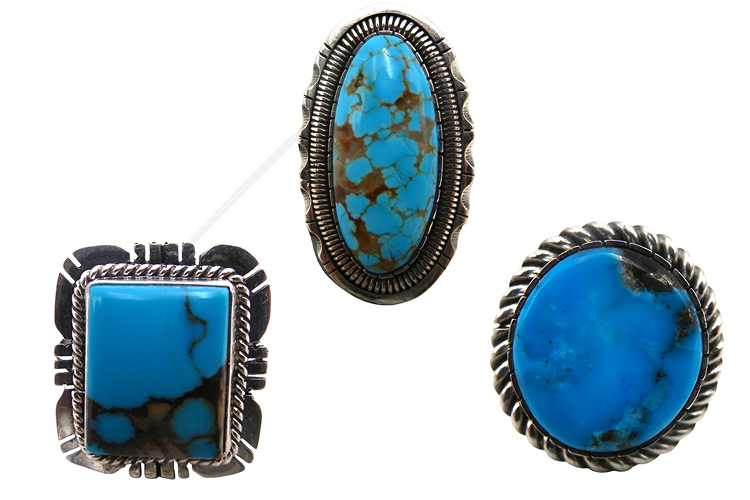
Men’s turquoise rings typically feature sterling silver and may include additional stones or symbolic engraving. Traditionally, rings were more than accessories; they were a statement of identity and, in some cases, spiritual protection. Today, turquoise rings add a distinctive flair to both casual and dress outfits, bridging cultural heritage with contemporary style.
Bracelets and Cuffs
Turquoise bracelets and cuffs have become signature pieces in men’s jewelry. Cuff bracelets, with their bold silver bands and striking stone inlays, are especially popular because they make powerful visual statements. From simple, understated bands to elaborate pieces incorporating other semiprecious stones, these bracelets remain a versatile staple of men’s adornment.
Other Accessories
Beyond rings and bracelets, turquoise appears in various men’s adornments, such as pendants, bolo ties, belt buckles, earrings, and even necklaces. These pieces allow wearers to incorporate Southwestern flair into everyday wear or to complete a themed look that nods to tradition and craftsmanship.
The Meaning and Power Attributed to Turquoise
Many ancient cultures believed turquoise held inherent powers, emotional resilience, physical healing, and psychological balance. Native American tribes saw it as a protective stone that could strengthen the wearer’s spirit and fortune. Some believe turquoise promotes harmony, detoxifies the body, and supports emotional healing by calming the mind and balancing energy. While these beliefs vary from culture to culture, the consistent theme is that turquoise has always been thought to impart strength and positivity to its wearer.
How to Style Men’s Turquoise Jewelry
Turquoise jewelry doesn’t have to be ostentatious to make a statement. Because of its vibrant color range, especially in blues and greens, it pairs beautifully with neutral tones such as black, gray, denim, and tan. A turquoise ring with a casual outfit, such as jeans and a T‑shirt, injects personality, while a simple cuff bracelet can add subtle flair to a collared shirt or blazer. Layering pieces, such as pairing a bracelet with a watch or stacking cuffs, creates depth and dimension to personal style, showing how versatile turquoise can be in both informal and more polished looks.
Caring for Turquoise Jewelry
Authentic turquoise jewelry can last a lifetime when properly cared for. Unlike harder gemstones, turquoise is relatively soft and porous, meaning it can absorb oils, chemicals, or water if not protected. Always keep turquoise dry and store it in a soft pouch or lined jewelry box when not worn. Avoid contact with household cleaners, perfumes, and extreme heat. Cleaning should involve gentle polishing with a soft cloth, not harsh chemicals. These simple care tips help preserve both color and structural integrity, keeping your turquoise jewelry vibrant for years.
Choosing Turquoise Jewelry with Cultural Respect
Wearing Native American‑inspired turquoise jewelry is acceptable when done with cultural awareness and a genuine interest in the piece’s origin and significance. The wearer should understand that a handcrafted piece is more than fashion; it’s a chapter of history. Choosing authentic jewelry from respectful, transparent sources ensures that cultural respect accompanies aesthetic appreciation.
Honoring Tradition Through Responsible Collecting
A Man’s Guide to Turquoise Jewelry wouldn’t be complete without acknowledging the responsibility that comes with wearing these meaningful pieces. For collectors and enthusiasts alike, men’s turquoise jewelry represents more than visual appeal; each piece embodies ancient traditions, community identity, and the legacy of skilled artisans. Supporting authentic craftsmanship helps sustain indigenous jewelry traditions, allowing them to thrive in a modern context while honoring their roots.
Finding the Right Piece with Knowledge and Care
When selecting turquoise jewelry, working with trusted sources makes all the difference. Palms Trading Company has built decades‑long relationships with Native artisans and offers jewelry that is carefully authenticated and clearly labeled.
For those seeking guidance, our personal shopper service provides thoughtful, one‑on‑one assistance to help you find jewelry that fits your style and values.
We invite you to learn more about our mission, which centers on cultural respect, transparency, and direct artisan partnerships.
If you have questions about turquoise, craftsmanship, or care, please contact or email us today. Our team is always happy to help you shop with confidence and respect.