

The meaning of the Navajo squash blossom necklace goes far beyond its striking beauty. As one of the most iconic and recognizable pieces of Native American jewelry, it’s celebrated for its detailed silverwork, bold turquoise settings, and deep cultural roots. While many are drawn to its beauty, few realize the complexity behind its design, historical influences, symbolic elements, and modern styling options. Whether you’re a collector, admirer, or buyer, understanding the full story behind the squash blossom necklace helps you appreciate its artistry and significance on a deeper level.
The Meaning and Origins of the Squash Blossom Necklace
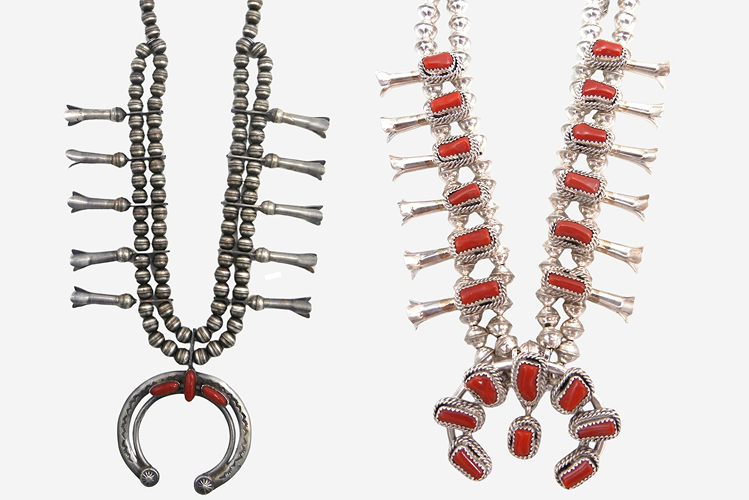
The squash blossom necklace is traditionally crafted by Navajo silversmiths, though it was later adopted and interpreted by the Zuni and Pueblo peoples. The necklace is easily recognized by its series of silver beads and ornamental squash blossom shapes, crowned by a prominent crescent-shaped pendant known as the Naja.
The design isn’t directly modeled after a squash flower. Instead, the squash blossom beads likely evolved from Spanish-Mexican trouser and coat embellishments that resembled pomegranate flowers. The Navajo associated these with squash blossoms, which carry cultural associations with fertility, growth, and abundance.
The necklace dates back to the late 19th century, with the earliest forms emerging in the 1870s. The style was influenced by Spanish and Moorish motifs brought to the Americas by Spanish settlers. Over time, Native silversmiths adapted these symbols into their own aesthetic traditions.
While Navajo in origin, the Zuni Pueblo were the first to incorporate turquoise into squash blossom designs, a practice the Navajo later embraced.
Understanding the Naja Symbol
The Naja, a crescent or horseshoe-shaped pendant that anchors the necklace, traces its lineage to Moorish and Roman design motifs, which was later adopted by Spanish conquistadors. Native American silversmiths integrated this form into their own spiritual and decorative vocabulary.
Within Navajo symbolism, the Naja has come to represent protection and spiritual safeguarding. Some interpretations link the shape to the womb, suggesting life and fertility. When a turquoise bead is suspended in the middle, it is believed to symbolize a child in the womb. Over generations, the Naja became associated with the agricultural cycle and crop fertility.
Traditional and Contemporary Construction
Squash blossom necklaces are most often crafted from sterling silver and turquoise, but other semi-precious stones, such as coral, lapis, and spiny oyster shell, are also used. Though silver is traditional, you may see modern interpretations in gold.
A typical necklace will feature 12 squash blossom beads, six rising on each side from the central Naja pendant. These beads, inspired by Spanish colonial dress ornaments, are now fully integrated into Native jewelry forms.
How the Necklace Was Used Historically
Although squash blossom necklaces were not typically worn during sacred ceremonies, they were used to convey prestige and wealth. Both Native peoples and settlers in the Southwest often wore their wealth in the form of jewelry. Larger, more ornate necklaces were considered status symbols.
Wearing and Styling a Squash Blossom Necklace
A Navajo squash blossom necklace can be styled with many types of outfits and is often worn as the focal point of an ensemble. Both traditional and modern fashion lovers alike can appreciate its versatility. Consider wearing it over solid-color clothing to highlight its intricate craftsmanship and bold stones.
Coordinating Colors
When coordinating with your wardrobe, pay attention to how colors interact with turquoise:
- White or Ivory: Turquoise pops brilliantly against white and offers a subtler contrast with ivory.
- Navy or Denim: These darker shades create dramatic contrast with turquoise.
- Red, Orange, or Yellow: These colors enhance the warmth of the turquoise’s blue hue, producing a vibrant, balanced look.
- Black or Grey: These neutral tones make turquoise the boldest element in your outfit and are perfect for more formal occasions.
Choosing Necklace Length
Necklace length also plays a key role. Shorter styles offer versatile wear across different outfits, while longer pieces add visual impact, but should not hang too low.
Accessorizing with Matching Pieces
You can accessorize further by pairing the necklace with matching squash blossom earrings or bracelets. These pieces often reflect similar beadwork and designs. Layered or stand-alone, they offer options to personalize your style.
How to Spot and Authenticate a Genuine Navajo Squash Blossom Necklace
Due to the popularity of these necklaces, many imitations and mass-produced items exist. Understanding how to verify authenticity is key when purchasing.
- Buy from Trusted Sources: Always buy directly from Native American artists or reputable dealers. At Palms Trading Company, all pieces are either directly sourced or clearly labeled if authenticity cannot be confirmed.
- Look for Hallmarks: Genuine pieces often bear the artist’s hallmark or signature engraved on the back. Research these marks when possible.
- Check the Price: Authentic squash blossom necklaces generally retail around $1,500 or more. Extremely low prices are a red flag.
- Magnet Test: Solid silver is not strongly magnetic. If the necklace sticks to a magnet, it’s likely not genuine sterling.
- Watch for the Word “Style”: Sellers of counterfeit items often use terms like “Navajo style” or “Native American style.” This is a legal workaround, and a major warning sign.
- Signs of Aging: Vintage pieces will have patina, scratches, or tarnish. If it looks brand new but is claimed to be old, ask questions.
- Examine the Turquoise: Real turquoise may be natural or stabilized, but it should never be plastic. Sellers are legally required to disclose this.
- Tool Marks and Settings: Handcrafted pieces often show subtle hammer marks and use natural materials, like sawdust, to secure stones. Adhesives are a red flag.
Where to Buy Authentic Navajo Squash Blossom Jewelry
At Palms Trading Company, we work directly with Native American artisans to offer only genuine, handcrafted jewelry. Every squash blossom necklace we carry is carefully authenticated, ensuring you’re receiving a piece that reflects both tradition and cultural integrity.
Whether you’re shopping in-store in Albuquerque or browsing online, our team can help you choose a necklace that suits your style, budget, and story, while also helping you understand the meaning and significance of the Navajo squash blossom necklace. If you’d like help finding the right piece, our personal shopper service offers one-on-one guidance tailored to your preferences.
To learn more about our mission and long-standing relationships with Native artists, or have any questions about authenticity, pricing, or available pieces, feel free to contact us. We’re always happy to help.