


Native American jewelry is celebrated for its beauty, craftsmanship, and cultural depth. This guide on how to ethically buy authentic Native American jewelry helps buyers understand what truly sets genuine pieces apart from imitations. From intricate turquoise inlays to sterling silver overlay and symbolic designs, authentic pieces are not just adornment; they carry centuries of tradition, artistic mastery, and spiritual significance. However, the markets today are filled with imitations and misrepresentations, making it essential for buyers to understand how to identify real Native American jewelry, why authenticity matters, and how to make ethical purchases that support indigenous artists.
Why Authenticity Matters in Native American Jewelry
Native American jewelry is not merely decorative; it reflects ancestral techniques, deep cultural narratives, and specific tribal art forms developed over long histories. For many tribes, jewelry was and is tied to ceremonial roles, trade, identity, and community status. Authentic pieces embody this heritage and preserve artistic legacy, while fake or misrepresented pieces dilute cultural meaning and often exploit artists’ work without compensation.
How to Tell If Native American Jewelry Is Authentic
Authenticity involves multiple factors, from materials and craftsmanship to artist identity and labeling. Below are comprehensive ways to evaluate a piece.
Look at Craftsmanship & Materials
Handmade pieces show subtle irregularities, not uniform machine precision. Quality materials such as sterling silver and natural gemstones are typical of authentic work. For example, sterling silver should not be magnetic and is often marked “925,” while imitation pieces are often silver‑plated or made with alloys like Mexican, German, or nickel silver.
Examine Stone Quality, Especially Turquoise
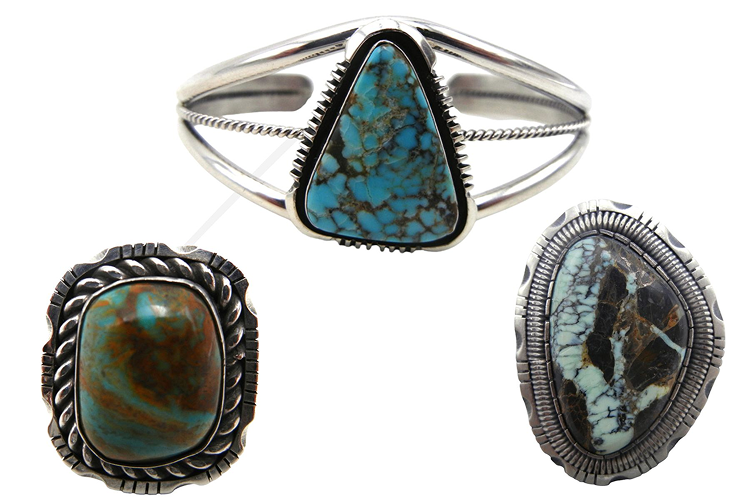
Turquoise is one of the most widely used and recognizable stones in Native American jewelry. Natural turquoise often shows a matrix (vein‑like markings), varying colors, and a hardness that allows it to hold its shape over time. While stabilized does not mean fake, any altered turquoise should not be misrepresented as natural turquoise.
Check for Hallmarks & Signatures
Many indigenous artists sign their work with hallmarks or initials that can indicate authenticity, tribe, or individual artist style. While not all artists sign their pieces, a hallmark often adds confidence.
Evaluate Craft Style & Technique
Certain techniques are distinctive to specific tribes, for instance:
- Sand casting/tufa casting in some Southwest traditions
- Inlay work with stones wedged into settings without adhesives
- Silver overlay techniques are unique to some Pueblo artists
Recognizing these tells helps distinguish authentic handmade work from mass‑produced jewelry.
How Labeling and Law Help Protect Authenticity
The Indian Arts and Crafts Act of 1990 mandates that items labeled “Native American” or “Indian” must be created by artists who are enrolled members of recognized tribes. Terms like “Indian‑style” or “Native‑inspired” indicate imitation or non‑Native production. Ensuring proper labeling helps protect consumers and authentic artists alike.
Seller and Inventory Evaluation: A Key Step
Check the Seller’s Inventory
Authentic handmade pieces tend to vary; no two are exactly alike. If a seller’s inventory contains identical pieces in quantity, they are likely machine‑made or mass‑produced. Authentic jewelry should have distinct variation indicative of individual handcrafting.
Buy from Established, Reputable Dealers
Reputable dealers should be able to:
- Answer questions about the artist’s background and tribal affiliation
- Provide provenance or artisan stories
- Recognize hallmarks and materials
Buying from trusted dealers reduces the risk of purchasing fake or misrepresented items.
Authenticity Signals Specific to Turquoise Jewelry
Turquoise holds cultural significance in many Native American communities, symbolizing strength, vitality, and protection. When assessing turquoise jewelry:
Price Reflects Craft
Authentic turquoise jewelry reflects skilled labor and quality materials. Suspiciously low prices often signal imitation or mislabeling.
Look for Matrix & Physical Texture
Look for natural markings and hardness indicative of real turquoise rather than dyed or composite stones. When in doubt, ask about stabilization and whether the stone has been treated.
Understand Terms Around Turquoise
Terms like “stabilized,” “block,” or “chip” indicate alterations in stone, not necessarily fake, but not purely natural, and should be clearly disclosed at purchase.
Spotting Fake Native Jewelry
With increased popularity, imitation jewelry has flooded the market. Fake pieces often:
- Are perfectly symmetrical
- Use low‑quality metals or stones
- Lack of craftsmanship nuance
- Have imprecise or industrial manufacturing
- Pay close attention to these visual and tactile clues when inspecting a piece.
Appearance and Detailing
Authentic handmade jewelry may show slight variations in stamping, hand‑shaping, and pattern. Machine‑made fakes often display uniformity that is too perfect, a telltale sign of mass production.
Pricing Red Flags
If a piece priced as authentic is significantly cheaper than similar pieces, it is likely not genuine. Authentic pieces reflect time‑intensive labor and quality materials, which should be fairly compensated.
How to Identify the Artist and Tribal Affiliation
Authenticity also relates to who made the jewelry. Many genuine Native American artists will:
- Provide specific tribal affiliation (e.g., Hopi, Navajo, Zuni)
- Use specific tribal artistic methods
- Have documented lineage or membership in recognized tribes
- Generic or vague tribal claims can indicate inauthenticity.
How to Ethically Purchase Native American Jewelry
Authentic purchasing goes beyond verifying materials; it means ensuring the economic and cultural well‑being of the artists.
Support Fair Artist Compensation
Ethically sourced jewelry should be purchased from sources that:
- Buy directly from artists
- Pay fair prices
- Build long‑term, respectful relationships
- Supporting fair trade ensures artists receive proper compensation and recognition.
Respect Cultural Appropriation Boundaries
When jewelry is created respectfully and authentically, wearing or owning it can be a celebration of culture. However, wearing pieces that are mass‑produced or misrepresented can inadvertently contribute to cultural misappropriation.
Ask Questions About Origin
A reputable seller should be knowledgeable about:
- The artist’s background
- Tribal methods are included in the piece
- Materials and their sourcing
- How the piece was made
- If the seller cannot provide this, it is a sign to proceed cautiously.
Becoming a Smart and Respectful Buyer
Authentic Native American jewelry matters for both cultural preservation and quality artistry. To confidently buy authentic pieces:
- Learn distinguishing materials and techniques
- Understand the Indian Arts and Crafts Act
- Evaluate craftsmanship and pricing
- Check the artist’s tribal affiliation
- Buy from reputable, ethical sellers
- These practices not only protect your investment but also honor the traditions and livelihood of Native artisans.
Honoring Craft, Culture, and Conscious Collecting
Learning how to ethically buy authentic Native American jewelry is more than just a checklist; it’s a meaningful way to engage respectfully with living cultural traditions. Every genuine piece represents hours of skilled handwork, generations of passed‑down knowledge, and the identity of the artist and their community. By understanding authenticity, craftsmanship, and ethical sourcing, you become an informed steward of this artistry rather than a passive consumer.
At Palms Trading Company, we believe that education and transparency are essential to preserving Native American art. For decades, we have worked directly with Native artisans, building relationships rooted in trust, fairness, and cultural respect. This direct collaboration allows us to confidently share the stories, materials, and traditions behind each piece we offer.
Whether you are looking for collectibles or searching for something specific, our personal shopper service is designed to guide you thoughtfully through the process, helping you find jewelry that aligns with your style, values, and appreciation for cultural heritage, without pressure or uncertainty.
We invite you to learn more about our mission and our commitment to cultural respect and authenticity. If you have questions about authenticity, provenance, or caring for your jewelry, please contact or email us today. Our team is always happy to help you move forward with confidence, care, and respect for the artists who make this remarkable tradition possible.