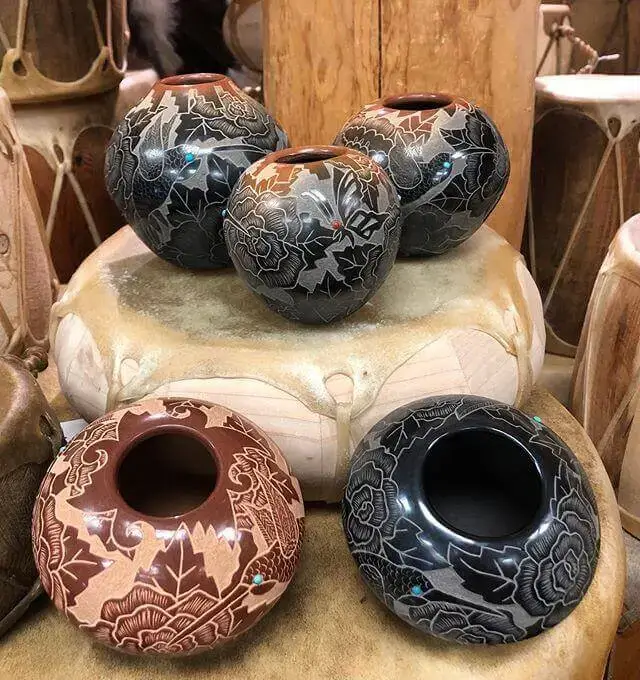



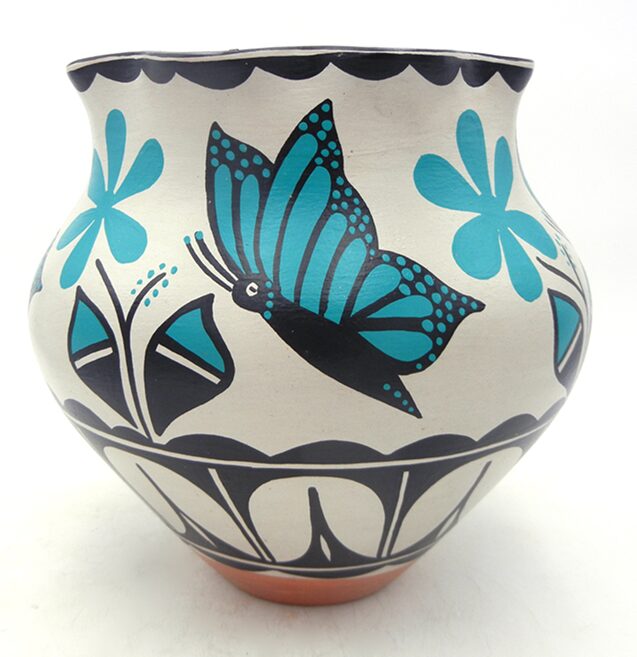
Understanding how Pueblo pottery is made offers a deeper appreciation for this cherished Native American art form. Passed down through generations, it reflects the rich heritage, spirituality, and craftsmanship of Pueblo communities in the Southwest. From the ancient Anasazi to today’s Santo Domingo potters, each piece tells a meaningful story through traditional techniques, cultural symbolism, and a lasting connection to the earth.
A Brief History of Pueblo Pottery
The legacy of Pueblo pottery dates back thousands of years. Its roots can be traced to the Ancestral Puebloans, also known as the Anasazi, who first developed pottery-making techniques that continue to influence Native American artisans today.
Among the modern contributors, the Santo Domingo Pueblo (also known as Kewa Pueblo) holds a prominent place. Situated along the Rio Grande in New Mexico, the Santo Domingo people have long been celebrated for their functional and symbolic pottery traditions. Their methods reflect daily life, spiritual belief, and environmental harmony.
Native American pottery techniques have been passed down through generations, showcasing the rich cultural heritage and artistic mastery of various tribes. Among these, the Pueblo people (particularly the Santo Domingo tribe) have made significant contributions to this ancient art form. Their pottery is not only a testament to their skill but also serves as a cultural symbol, telling stories and preserving traditions.
Defining Pueblo Pottery
Pueblo pottery refers to handcrafted pottery pieces made by the Pueblo peoples, a collective of Native American tribes residing in the Southwestern United States. The word “Pueblo” comes from the Spanish term for “village,” referencing both the communal settlements and the deeply rooted artistic practices that thrive within them. Pueblo pottery is recognized for its diversity, as each tribe contributes unique techniques, shapes, and symbolic designs, making the tradition richly varied and culturally distinct.
Among these traditions, the pottery of the Santo Domingo Pueblo (Kewa Pueblo) stands out for its enduring cultural and spiritual importance. For the Santo Domingo people, pottery is more than art; it is a vital expression of their identity. The clay used is sourced from the land surrounding their village, grounding each piece in its native environment. These vessels are often adorned with symbols and motifs that tell stories of heritage, spiritual beliefs, and the natural world.
Materials & Preparation
The creation of Pueblo pottery begins with the sourcing of natural clay from local regions, a practice deeply tied to the land. Artists clean and mix the clay to achieve a workable consistency.
To strengthen the clay and prevent cracking during firing, potters often mix in temper, a material such as sand or crushed stone.
Forming Methods
The traditional Pueblo hand-coiling technique involves rolling the clay into long, rope-like coils, which are then stacked and smoothed to create the vessel’s form. This method demands great patience and control.
Santo Domingo potters often employ a variation called the coil-and-scrape technique, where the form is refined through scraping tools to create smooth, symmetrical surfaces. Tools made from gourds and stones are commonly used to shape and refine the pottery surface.
Drying & Pre‑Firing Finishes
Once the pot’s shape is complete, it is slowly air-dried. This careful drying process prevents cracks and ensures structural integrity. After drying, the pot may be polished using stones, giving it a soft, glossy finish.
Decoration & Painting
Artisans use natural pigments derived from minerals and plants to paint their pottery. Brushes crafted from yucca fibers are traditionally used to apply designs.
Motifs such as geometric shapes, bird imagery, and plant forms are commonly painted onto the surfaces. These are not just artistic choices; they often carry deep cultural significance.
Symbolism & Cultural Meaning
Pueblo pottery designs are steeped in symbolism. Water motifs represent life and renewal, while spirals may symbolize life cycles or eternity. Birds and animals often represent traits such as wisdom or agility. Feathers symbolize spiritual connection, and geometric patterns often suggest unity and order.
These symbols are passed down through generations, evolving slightly with each artist while retaining their core meanings. Pottery, in this sense, serves as a cultural manuscript that preserves identity and history.
Firing Process
The pottery is fired in an outdoor kiln or pit, with temperatures soaring as high as 1,500 degrees Fahrenheit. This firing transforms the clay into a durable material. Managing the temperature throughout the process is critical; skilled potters monitor the firing to ensure a flawless finish.
Functional & Cultural Value
Historically, Pueblo pottery served both practical and ceremonial roles. Today, while still functional, these pieces are more often celebrated as works of art that symbolize resilience, heritage, and artistic mastery. Collectors cherish Pueblo pottery for its deep narrative and refined aesthetics.
Supporting Authentic Potters
When purchasing Pueblo pottery, it’s vital to support Native American artisans who uphold and continue these traditional practices. Authentic Pueblo pottery, particularly from New Mexico, is handcrafted by skilled potters who blend time-honored methods with individual creativity.
Palms Trading Company proudly offers a curated selection of Pueblo pottery, featuring works from both renowned master potters and emerging artists. Each purchase supports ethical sourcing practices and helps preserve the cultural heritage and continuity of Pueblo pottery traditions.
Why Authentic Pueblo Pottery Matters
Understanding how Pueblo pottery is made enhances more than just appreciation; it creates a deeper connection to the people, traditions, and land behind each piece. From gathering raw clay to painting symbolic motifs and firing in outdoor kilns, every step reflects centuries of cultural resilience and artistic mastery.
Authentic Pueblo pottery is more than an art form; it is a living testament to Native American identity, storytelling, and spirituality. This vibrant tradition spans generations, from its ancient Ancestral Puebloan roots to the living artistry of today’s potters. Whether used in a ceremony or displayed as art, each piece carries meaning beyond its form.
At Palms Trading Company, we are honored to support Native American artisans by offering a curated collection of handcrafted Pueblo pottery. Every piece we carry reflects the authenticity, craftsmanship, and cultural integrity of this sacred traditional art.
If you are seeking to begin or expand your collection, we invite you to explore our wide range of Pueblo pottery. Each item is thoughtfully made by talented Native American artists. Contact or email us today to find the piece that will enrich your collection and connect you to a story centuries in the making.