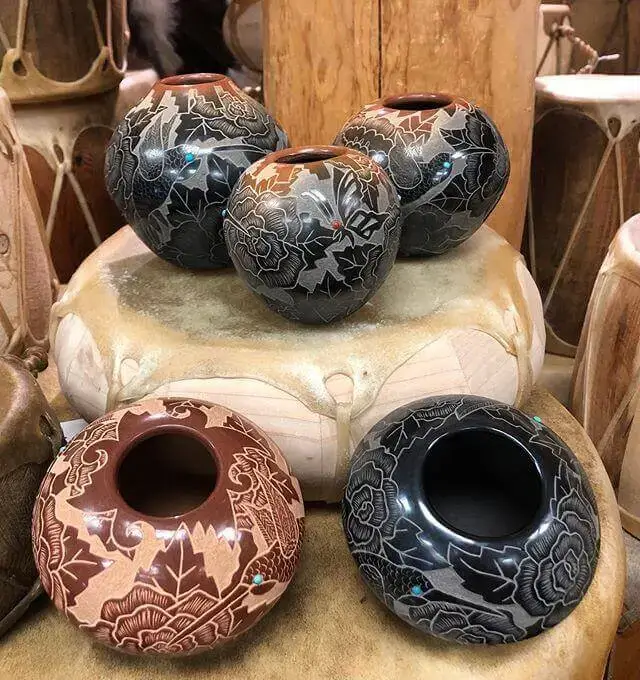



This guide to turquoise in Native American jewelry offers a deep exploration into one of the most enduring symbols of Indigenous culture and creativity. Turquoise occupies a central place in Native American art, spirituality, and symbolism. Known as a “living stone,” its vivid blue and green hues have captivated humans for millennia, from ancient Egyptians to Persian empires, and most enduringly among indigenous tribes of the American Southwest. For tribes such as the Navajo, Hopi, Zuni, Ojibwe, and Acoma Pueblo, turquoise is more than beautiful; it is an emblem of protection, prosperity, spiritual connection, and cultural identity. This guide explores the history, cultural significance, symbolic meaning, trade networks, and modern artistic traditions of turquoise as it became the heart of Native American jewelry.
What Turquoise Is: The Stone, Its Formation, and Unique Characteristics
Turquoise is a semi‑precious mineral formed through precise geological conditions that occur over millions of years. It is technically a hydrous phosphate of copper and aluminum that often forms in arid regions. Turquoise’s signature blue to blue‑green hues result from the presence of copper, while varying concentrations of iron and other minerals can shift its color toward green‑yellow tones.
How Turquoise Forms in The Earth’s Crust
Turquoise is created when mineral‑rich acidic water seeps through porous rock, such as limestone or sandstone, carrying copper and aluminum. Over long periods, these elements build up molecularly until they crystallize into turquoise. Because the stone requires very specific geochemical environments, including desert climates and host rocks rich in certain minerals, high‑quality turquoise is relatively rare compared to other semi‑precious stones.
Matrix and Visual Variations
A distinctive feature of natural turquoise is the matrix, the trace patterns left by the host rock in which the stone formed. These veins may appear as dark brown, tan, or black lines across the stone’s surface. Matrix does not detract from the stone’s beauty; in fact, many collectors prize matrix patterns for their individuality and indication of natural origin.
Turquoise in Ancient Civilizations: A Global History
Long before it became central to Native American culture, turquoise was revered worldwide.
Ancient Egypt and Persia
Around 3,000 BCE, Egyptians were using turquoise in jewelry, burial masks, and amulets. King Tutankhamun’s iconic mask, richly inlaid with turquoise, illustrates how deeply this stone was integrated into spiritual and cultural practices. Meanwhile, in ancient Persia, turquoise (known as pirouzeh) was believed to bring victory and protection. Persian architecture and jewelry were often adorned with turquoise, reflecting its sacred symbolism.
Turquoise Across Continents
Turquoise has been found in burial sites from Mexico to Chile and Central America, showing its significance across early cultures. The stone continued to travel across trade routes, influencing a global appreciation for its spiritual and aesthetic values long before European contact with the Americas.
Turquoise in Native American Culture: Spiritual Meaning and Symbolism
Turquoise is not just a gemstone in Native cultures; it is a symbol, talisman, and spiritual sentinel.
A Living Stone with Deep Meaning
Native American tribes often consider turquoise a “living stone,” capable of reflecting environmental influences, personal experiences, and spiritual forces. Because the stone can change slight hues over time, many Native traditions regard it as a responsive, almost animate entity.
Tribal Beliefs and Legends
Different tribes carry unique stories about turquoise:
- Navajo: Turquoise is believed to represent life and the connection between earth and sky. Some legends depict turquoise as formed from human tears after drought, symbolizing resilience and renewal.
- Hopi: Hopi tradition holds that turquoise was spiritually linked to underground forces and carried protective strength during difficult journeys.
- Acoma Pueblo: Ancient stories say the creator Iatiku shared turquoise beadwork practices with the Acoma people, a tradition tied to beauty and spiritual empowerment.
- Ojibwe: Turquoise is woven into dreamcatcher symbolism, often depicted as a spider, believed to protect sleepers from bad dreams and misfortune.
Protection, Healing, and Fortune
Spiritual roles of turquoise varied, but several themes are consistent:
- Protection: Turquoise was worn into battle or carried by hunters to safeguard against danger.
- Healing: Many tribes believed turquoise could reflect health changes and even restore wellness.
- Prosperity and Good Fortune: Hanging turquoise in dwellings or wearing it in ceremonies was believed to attract fortune and balance.
The Arrival of Silver and the Rise of Navajo Turquoise Jewelry
Turquoise’s prominence in Native American art reached a new chapter with the introduction of silversmithing in the 1800s.
Early Influences and First Silversmiths
Spanish settlers brought silversmithing techniques to the Southwest, captivating local artisans. A Navajo blacksmith named Atsidi Sani persuaded a Spanish craftsman to teach him metalworking. From this beginning, Navajo artisans began melting down everyday silver objects, including coins and buckles, to fashion jewelry. By the early 1900s, makers like Atsidi Chon were incorporating turquoise into sterling silver settings, blending stone with metal in designs that are now iconic.
The Squash Blossom Necklace: A Cultural Icon
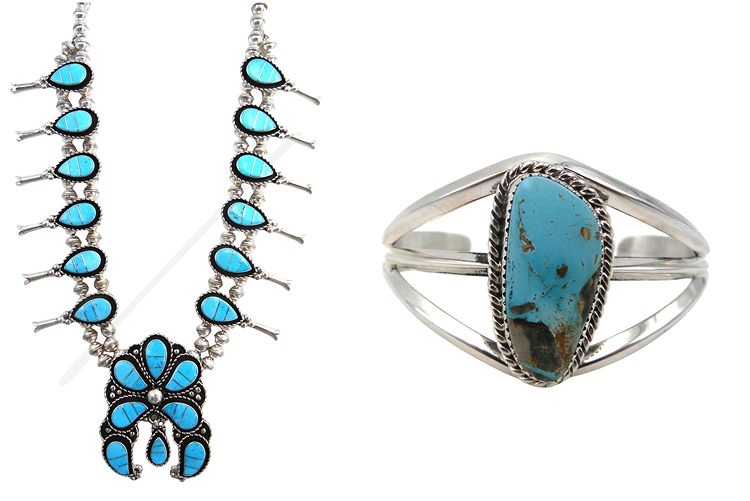
One of the most recognizable forms of Navajo turquoise jewelry is the squash blossom necklace. Thought to be inspired by symbols carried by Spaniards, this necklace features a naja, which is a crescent shaped pendant believed to ward off evil, and blossom‑like ornaments rising up the necklace chain. Over time, the squash blossom became a symbol of esteem, status, and cultural fusion.
Techniques of Navajo Silverwork, Craftsmanship Meets Symbolism
The beauty of Navajo turquoise jewelry comes not only from the stone but from the meticulous craft that holds it.
Silverwork Methods, Stamping, Inlay & Overlay
Navajo artisans are renowned for several silverwork techniques:
- Stamping: Using hand‑carved stamps to create patterns in silver.
- Inlay: Carefully cutting stones to fit into silver recesses for seamless design.
- Overlay: Layering silver sheets with cut‑out designs over backing metal.
Each technique requires patience, skill, and deep familiarity with materials, traits passed down through generations.
Hallmarks and Authenticity
Authentic Navajo pieces often carry hallmarks, engraved signatures, or symbols denoting the artist or tribal affiliation. These marks can signal origin and artistic lineage. Genuine pieces also use high‑quality silver and natural turquoise, which can be verified by weight, finish, and craftsmanship detail.
Turquoise Trade Routes, From Ancient Networks to Modern Jewelry
Turquoise did not remain isolated to one region; it moved across landscapes and cultures long before modern commerce.
Ancient Trade Networks
Long before European contact, trade networks carried turquoise across regions. Tribes exchanged turquoise, coral, hides, pottery, and crafted goods, creating webs of cultural exchange. The Yuman people traded buffalo hides for marine shells, while South American tribes exchanged scarlet macaw feathers for prized turquoise from North America. These ancient paths laid the foundation for how materials and meanings could traverse regions and cultures.
Turquoise as Barter and Value
Turquoise served not just aesthetic value but practical trade value. Its beauty and rarity made it a commodity, propelling its journey across tribes and later into global trade networks. As tribal economies evolved, turquoise jewelry became both personal adornment and currency, a testament to its enduring worth.
What Turquoise Symbolizes in Native American Tribes Today
Turquoise meaning varies between tribes, but several universal themes emerge:
- Balance Between Earth and Sky: Many tribes see turquoise as a physical embodiment of this connection, mirroring desert skies.
- Life and Renewal: For tribes like the Navajo, turquoise resonates with life’s cycles, change, and spiritual presence.
- Celebration of Heritage: Wearing turquoise jewelry is a public affirmation of identity and cultural pride.
Incorporating Turquoise Jewelry into Modern Style
Turquoise and silver jewelry designed by Native artisans is as much at home with contemporary fashion as it is with traditional attire. Bold turquoise rings can highlight neutral colors, while cuffs and necklaces offer statement pieces that blend heritage with modern design. Whether paired with denim and leather or formal attire, turquoise jewelry signals confidence, individuality, and respect for craftsmanship.
Caring for Turquoise Jewelry
Turquoise is softer and more porous than many gemstones, which means special care increases longevity. Avoid exposing turquoise to household chemicals, perfumes, or excessive heat. When storing, keep pieces in dry, soft cloth pouches to protect color and surface integrity. Gentle polishing with a soft cloth preserves the stone’s luster without harsh chemicals that could damage the stone or silver.
Honoring Tradition Through Responsible Collecting
For collectors and enthusiasts, turquoise jewelry is not just an adornment; it is a continuation of centuries-old craftsmanship, cultural memory, and Indigenous storytelling. Each piece embodies the worldview, artistic identity, and ancestral lineage of the artisan who made it. Collecting these works responsibly means recognizing their significance, buying from authentic sources, and understanding the tribal traditions they represent. In doing so, you help preserve not only art but the living heritage of Native American communities.
Finding the Right Piece with Knowledge and Care
Choosing a piece of turquoise jewelry is a deeply personal process, but also one rooted in awareness and respect. Palms Trading Company is proud to offer authentic, artisan-made turquoise jewelry from trusted Native creators. With decades-long relationships and a commitment to transparency, we ensure each piece is labeled for authenticity and connected to its maker whenever possible.
For personalized guidance, our personal shopper service is designed to help you find the piece that resonates with your style and values, without pressure or confusion.
If you’d like assistance or have questions about materials, symbolism, or care, please contact or email us today. We’re always happy to help you make an informed and confident purchase.
You can also learn more about our mission, one that prioritizes fair trade, cultural education, and supporting Indigenous communities directly.
Celebrating the Cultural Heart of Turquoise Jewelry
As seen throughout this guide to turquoise in Native American jewelry, turquoise is not simply a trend or a material; it is a thread woven into the lives, ceremonies, economies, and expressions of countless generations. From its sacred symbolism to its trade routes, from ancient mines to modern necklaces, the story of turquoise is the story of cultural endurance and renewal.
When you wear authentic Native American turquoise jewelry, you’re not just accessorizing; you’re honoring the artists, traditions, and spiritual legacy behind every bead and silver flourish.