


From Concho Belts to Sacred Symbols | A Symbol of Artistry and Identity
The history of Navajo jewelry is as rich and intricate as the pieces themselves. Rooted in centuries of tradition and culture, Navajo jewelry has become a symbol of artistry and identity. Each handcrafted item, from concho belts to squash blossom necklaces, tells a story of resilience, spirituality, and beauty. Understanding the origins and evolution of these pieces helps us appreciate the depth of skill and heritage they embody.
Origins of Navajo Jewelry and Silversmithing
A Craft Introduced by the Spanish
It wasn’t until the mid-1800s that the Navajo began making jewelry. Spanish settlers who arrived in the Southwest wore silver adornments that caught the eye of the Navajo people. A local blacksmith named Atsidi Sani was particularly intrigued and convinced a Spanish silversmith to teach him the craft. He became the first Navajo silversmith, creating early pieces such as conchos, which gained popularity among both Spaniards and the Navajo. Atsidi Sani passed his knowledge down to his sons and other interested artisans, igniting a cultural art form that would grow for generations.
Cultural Influences and Materials
The origin of Navajo jewelry is deeply connected to the tribe’s cultural practices. Jewelry was never merely decorative; it signified status, wealth, and spiritual meaning. Over time, influences from neighboring tribes like the Zuni and Hopi enriched Navajo jewelry through new techniques and materials, including the now-iconic turquoise.
The Concho Belt: An Iconic Navajo Creation
Early Beginnings and First Phase (1860s–1880s)
Concho belts were among the first pieces of silverwork created by the Navajo. “Concho,” derived from the Spanish word concha (shell), refers to the round, ornate disks that make up the belt. Navajo artisans began creating them in the late 1860s using melted Mexican silver pesos. The first conchos had diamond-shaped slots and a central bar for threading the leather strap, often featuring scalloped edges and punched holes. This earliest phase, which lasted until 1880, marked the foundation of the Navajo silversmithing tradition.
Second Phase (Late 1800s–Early 1900s)
During the second phase, Navajo artisans began soldering silver or copper bars to the backs of the conchos, allowing more detailed decoration on the front while concealing the leather strap. These belts were often exchanged as tokens of love or worn to indicate wealth and social status. The increasing intricacy of designs during this time reflects the community’s growing technical skill and appreciation for artistry.
Third Phase (Early 1900s–1930s)
This phase introduced the “butterfly”, a smaller concho placed between larger ones, creating a bow-like shape. Turquoise began appearing on these mini conchos, and copper backings became more common than silver. Belts from these early periods are now considered vintage.
Modern Concho Belts
Today, concho belts range from traditional silver and turquoise designs to modern creations incorporating gold, diamonds, and other precious stones. They are worn by both tribal and nontribal people and continue to hold ceremonial value in events like weddings and coming-of-age rituals.
How They’re Made Today
Modern concho belts are crafted with precision. Holes are punched into leather straps, and conchos are screwed into place. Artists may embed turquoise or other semi-precious stones in each concho. The conchos are securely fastened, and the belt is completed with a strap bar and buckle.
Navajo Jewelry Types and Signature Styles
Necklaces: The Squash Blossom
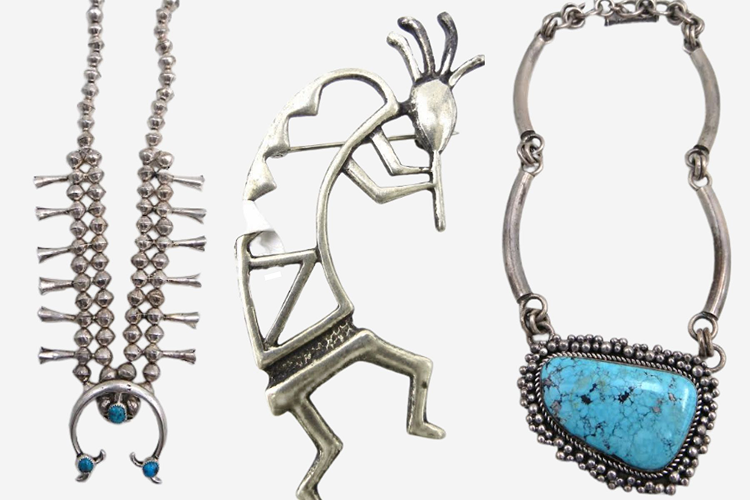
One of the most iconic Navajo necklaces is the squash blossom. Its pendant, the Naja (a crescent shape), originated in the Middle East, was adopted by the Spanish to ward off evil, and later integrated into Navajo design. Rising from the Naja are silver beads and squash flower motifs. While traditionally made with turquoise and silver, some squash blossom necklaces now feature other gemstones and materials. Wearing this necklace has long been a sign of status and wealth.
Bracelets: From Silver Bands to Gemstone Masterpieces
In the early 1900s, Navajo artisans began crafting bracelets, initially thick silver bands, later embellished with large turquoise stones. As turquoise mines opened in the 1920s, more elaborate designs followed, featuring twisted wires, scalloped bezels, and decorative motifs like raindrops, feathers, and leaves. Today, you can find bracelets made with gold, diamonds, and various gemstone combinations.
Design Styles in Navajo Jewelry
Single-Stone vs. Multi-Stone
Navajo jewelry often falls into two main design categories: single-stone and multi-stone creations. Single-stone pieces feature one central gemstone, most commonly turquoise, set prominently to draw the eye and emphasize the stone’s natural beauty. Multi-stone designs, on the other hand, combine several stones in carefully balanced arrangements that create intricate, captivating patterns. Both styles showcase the artist’s ability to harmonize metalwork with stone color, texture, and form, blending tradition with individual expression.
Row Style
The row style is one of the most recognizable forms of multi-stone Navajo jewelry. In this design, stones are arranged in a continuous line, most often horizontally, though vertical and diagonal arrangements are also popular. Each stone is skillfully cut, shaped, and set to form a symmetrical line that flows naturally across bracelets, necklaces, rings and earrings. The clean, orderly design highlights both the precision of Navajo silversmithing and the natural vibrancy of turquoise and other stones used.
Cluster Style
Cluster-style Navajo jewelry features stones placed closely together to form visually rich, textured designs. Unlike the row style, cluster groups stones in circular or radiating patterns that fill the surface with color and dimension.
- Arranged Cluster Style: This traditional approach groups stones of similar size and shape in symmetrical patterns, often forming floral or starburst motifs. The arranged cluster style reflects the classic aesthetic passed down through generations of Navajo artisans, demonstrating balance, harmony, and respect for ancestral techniques.
- Random Cluster Style: In contrast, the random cluster style breaks from strict symmetry. Here, stones of varied shapes and sizes are arranged in a freer, more organic composition. This approach emphasizes individuality, allowing each stone to maintain its natural form and texture. Random clusters celebrate creative freedom and highlight the unique character of every gemstone, resulting in one-of-a-kind pieces that capture the spirit of Navajo artistry.
Inlay Style
Channel inlay designs showcase the Navajo mastery of lapidary art. Using precise cutting and polishing techniques, each stone is shaped to fit perfectly within slender metal channels, typically silver, that form the framework of the design. Once set, the stones create a smooth, mosaic-like surface that gleams with color and texture. This meticulous process requires exceptional craftsmanship and patience, as each stone must align seamlessly with the next. The result is a refined, modern interpretation of traditional Navajo jewelry that merges geometry, artistry, and cultural symbolism.
Spiritual and Cultural Significance
The Meaning of Turquoise
Known in Navajo as “Doo tl’izh ii,” turquoise is more than decorative; it holds spiritual power. Believed to offer protection, healing, and good fortune, it connects the wearer to the sky, water, and earth. Its color, from light blue to deep green, symbolizes those natural elements, and its use in jewelry honors both ancestors and the environment.
Symbols in Navajo Jewelry
Navajo symbols add rich layers of meaning to each piece:
- Arrow: Protection; a broken arrow signifies peace
- Bear: Courage and physical power
- Butterfly: Transformation and spiritual messages
- Circle: The four elements and life cycles
- Coyote: Ancestors, cleverness
- Eagle: Power and victory
- Feather: Wisdom and honor
- Fire: Renewal and purification
- Horse: Strength and freedom
- Raven: Healing
- Snake: Rebirth and luck
- Wolf: Loyalty and communication
How to Identify Authentic Navajo Jewelry
Craftsmanship and Hallmarks
For anyone collecting or purchasing authentic Navajo jewelry, it’s essential to know how to recognize genuine pieces. Traditional Navajo jewelry is defined by its craftsmanship, typically featuring sterling silver, turquoise, and distinctive cultural symbols that reflect Navajo heritage:
- Materials: Authentic pieces are usually made from sterling silver and turquoise, with occasional use of coral, jet, or shell. These natural materials are key indicators of traditional Navajo work.
- Craftsmanship: True Navajo jewelry is handcrafted with intricate designs. Small imperfections often signal the artisan’s touch, while machine-made pieces lack the personal detail and character of handwork.
- Hallmarks: Many Navajo silversmiths stamp their creations with a hallmark, which may include initials or a unique symbol, usually found on the back of the piece.
- Designs: Look for traditional motifs such as the squash blossom necklace, the naja (crescent-shaped pendant), and animal symbols that carry spiritual and cultural meaning.
By recognizing these traits, you can confidently identify and appreciate the authenticity and artistry of Navajo jewelry.
A Living Tradition
Navajo jewelry remains a testament to cultural resilience and creativity. Passed down through generations, the art of silversmithing has become both a spiritual practice and an economic livelihood. Even as styles modernize, artisans honor their roots, ensuring each creation embodies the essence of Navajo tradition. Whether you’re a collector or simply an admirer, owning an authentic piece is a way to connect with this extraordinary heritage.
Where to Find Authentic Navajo Jewelry
At Palms Trading Company, we carry a wide selection of Navajo jewelry, from vintage concho belts to modern turquoise necklaces. Each piece reflects the rich history of Navajo jewelry and the enduring artistry that continues to inspire collectors around the world. Every item is hand-selected directly from Native American artisans, guaranteeing authenticity and ethical sourcing. Whether shopping online or visiting our Albuquerque store, our knowledgeable staff or personal shopper can help you find a piece that resonates with your personality and honors Native American tradition.
Contact us today to explore our curated collection and let us guide you to your next meaningful piece of Navajo jewelry.