


Turquoise has captivated people for centuries. North American Native tribes valued it for its cultural and spiritual significance, while modern fashion enthusiasts continue to embrace its beauty. Today, turquoise rings for women remain some of the most popular and meaningful pieces of jewelry, admired for their striking colors, artistry, and symbolism.
When shopping for turquoise rings, it’s important to understand the difference between stabilized and natural turquoise rings, learn how to evaluate quality, and know what care and authenticity checks are essential. By doing so, you not only make a beautiful addition to your collection but also an informed and lasting investment.
Differences Between Natural and Stabilized Turquoise
When buying turquoise rings, you’ll often encounter two main varieties: natural and stabilized. The key differences lie in texture, shade, and durability.
Texture and Shades
Natural turquoise has a smooth, waxy surface and comes in bright blues, greens, or even yellowish-brown shades. Stabilized turquoise, on the other hand, is treated with wax or resin to give it a more uniform look, preserve its color, and protect it from cracking.
Turquoise Formation
Natural turquoise forms underground through a chemical reaction involving copper compounds, aluminum silicates, water, and oxygen. This process produces stones with unique characteristics.
However, not all mined turquoise is suitable for jewelry. Stones that are too soft and porous are treated with stabilizers like resin, making them durable enough to wear. Sometimes, powdered turquoise is mixed with stabilizing agents to create block turquoise, which is cut into usable shapes.
Common Treatments
Turquoise may also undergo other treatments:
- Stabilization – resin fills pores to enhance hardness and retain color.
- Chalk/Reconstitution – crushed turquoise mixed with resin to form harder blocks.
- Imitation – other stones like Howlite or synthetics are dyed to resemble turquoise.
Knowing these treatments helps you ask the right questions and avoid imitations when buying turquoise rings.
Cultural Meanings of Turquoise
Turquoise has always carried deep cultural symbolism. Among Southwestern tribes, natural turquoise was often used as trading currency and worn for protection against evil spirits. Many tribes also use stabilized turquoise in both jewelry and ceremonial objects.
Across Native cultures, turquoise represents protection, courage, good fortune, and spiritual power. These meanings continue to add significance to turquoise rings for women today, making them more than just fashion accessories; they are wearable pieces of history and symbolism.
How To Judge the Value of Turquoise
The value of turquoise rings depends largely on the stone’s color, porosity, and matrix.
Color
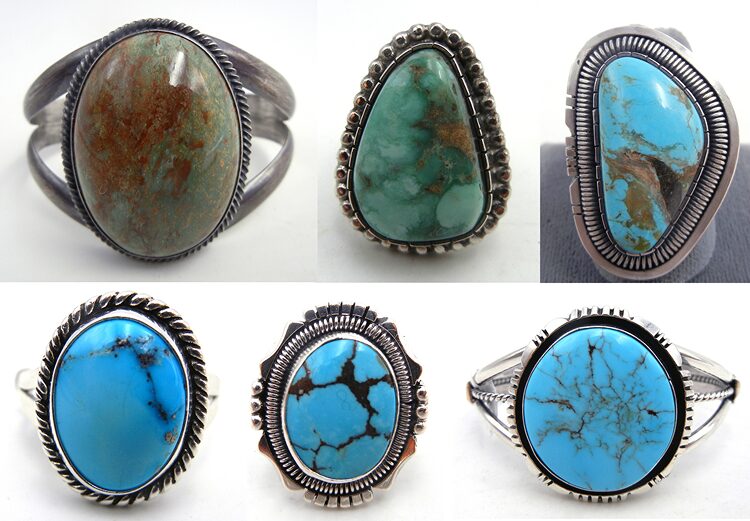
High-quality turquoise displays a clear, vibrant, and consistent color, typically in shades of blue or green. Lower-quality stones often appear cloudy or uneven. Rare colors, such as vivid greens or unique shades, often command higher prices.
Porosity
Turquoise is naturally porous. Stones with lower porosity are more stable, less likely to fade or crumble, and rank higher in quality. On the Mohs Hardness Scale, high-quality turquoise generally falls between 5 and 6.
Matrix
The matrix refers to patterns left by the host rock within the turquoise. Depending on the stone, this can appear as dark brown, tan, or even intricate “spiderweb” designs. Spiderweb matrix turquoise is especially prized for its delicate, lace-like patterns.
Ring Band and Style Considerations
When choosing a turquoise ring, consider the band style as much as the stone. Native American artisans create diverse designs, from sterling silver bands with inlaid turquoise to saddle rings with rounded settings and intricate silverwork.
Remember: the wider the band, the tighter the ring will feel. It’s usually best to size up at least half a size if you’re purchasing a wide band.
Caring for Your Turquoise Ring
Turquoise is softer than many other gemstones, so proper care is essential:
- Protect it from extreme heat, cold, or heavy impact.
- Avoid submerging it in water or using commercial jewelry cleaners.
- Gently wipe it with a soft cloth to clean.
- Store separately from harder stones, such as diamonds, to prevent scratches.
These steps will help preserve the beauty and longevity of your turquoise rings.
Natural vs. Stabilized: Price and Rarity
Because it is harder to find turquoise dense enough to shape without treatment, natural turquoise is rare and more expensive. Its bright, varied colors make it desirable for statement pieces.
Stabilized turquoise, while more common, offers durability and long-lasting color. Both types are used in rings, necklaces, earrings, and bracelets. Ultimately, the choice comes down to your personal style and budget.
Ensuring Authenticity
Because synthetic and imitation turquoise are common, always check for authentication:
- Research average market prices.
- Compare similar pieces across vendors.
- Ask for proof of authenticity.
- Purchase from trusted sellers who work directly with Native artisans.
Palms Trading Company certifies and authenticates all turquoise used in our jewelry so that you can shop with confidence.
Find Your Perfect Turquoise Ring at Palms Trading
Turquoise rings for women combine beauty, tradition, and individuality. By understanding the difference between stabilized and natural turquoise rings, judging value factors like color and matrix, and choosing authentic, well-crafted bands, you can select a ring that resonates with your style and heritage.
Whether you’re drawn to turquoise for its cultural meaning, vibrant colors, or elegant designs, investing in a high-quality turquoise ring is a decision you’ll cherish for years to come.
At Palms Trading Company, we specialize in authentic, certified Native American turquoise jewelry. Our personal shoppers and knowledgeable staff are here to help you find the perfect turquoise ring, whether online or in our Albuquerque store. Contact us today and let our personal shopper service guide you toward a meaningful, lasting piece of jewelry.