


The Cultural Legacy and Artistry of Native American Jewelry
Indigenous communities of the United States are known around the world for their unique and beautiful jewelry craftsmanship. The many types of authentic Native American jewelry reflect centuries of artistry and tradition, with each tribe contributing its own distinctive techniques and designs. However, when it comes to Native American jewelry, many people immediately associate turquoise rings or pendants with the art form and forget to take into account the wide variety and breadth of styles that have emerged from Indigenous communities for centuries. From Native American earrings to pendants to bolo ties, there are so many incredible types of Native American jewelry styles available to explore.
Not only is Native American jewelry unique and beautiful, but it is also steeped in culture, history, and tradition. The tribes that make these incredible pieces have been doing so for centuries, using natural materials found around them, such as shells, beads, bones, and stones. Each tribe has its own unique style of artistry, which often tells a story and reflects its culture and lifestyle.
Located between the Rocky Mountains and the Mexican Sierra Madre, the southwestern United States is home to roughly one-fifth of the country’s Native American population. The Indigenous people of this land have a rich cultural history and tradition, one which can be beautifully seen through the expert craftsmanship of jewelry making. These art pieces often utilize similar elements such as silver, turquoise, and intricate linework and engravings, though each tribe has distinct jewelry-making traditions.
Materials and Craftsmanship Across Tribes
Common Materials and Techniques
The production of Native American jewelry depends heavily on the tribe from which it is made. While the styles and materials have evolved, many elements remain rooted in traditional forms. Natural materials such as turquoise, coral, shell, bone, jet, and silver have long been central to Native American adornment. Some pieces remain popular among collectors and enthusiasts alike, while others inspire contemporary jewelry designers who draw from these ancient traditions.
Artists from many Southwestern tribes became renowned for silverwork, while others specialized in beadmaking, stone carving, or overlay designs. Across tribes, jewelry is not only aesthetic but deeply meaningful, used for ceremonial purposes, spiritual protection, and storytelling.
Distinct Jewelry Styles by Tribe
Navajo Jewelry
Traditional Navajo jewelry can often be recognized by its use of large, naturally shaped stones, most often turquoise, but also black onyx, malachite, and blue azurite. The Navajo are expert silversmiths, known for their unique technique of shaping silver around the stones rather than merely affixing stones to the metal.
The Navajo tribe’s jewelry is considered the most widespread and well-known among Native American tribes. By the end of the 19th century, after learning silversmithing from Spanish colonials, Navajo blacksmith Atsidi Sani began crafting silver jewelry and passed these skills on to his sons. His son, Atsidi Chon, later introduced turquoise into silver jewelry, creating the fusion that birthed one of the tribe’s most iconic pieces, the squash blossom necklace. This silver-beaded necklace, adorned with squash blossom petal beads and finished with a naja pendant, remains one of the most recognizable forms of Navajo artistry.
Zuni Jewelry
The Zuni People are also expert silversmiths, though their style contrasts the Navajo. Zuni jewelers are known for cutting and shaping stones with precision, fitting them into intricate silver patterns. Their signature techniques include inlay, clusterwork, petit point, and needlepoint designs, each featuring small, hand-cut stones arranged into detailed motifs.
The Zuni tribe’s jewelry tradition is deeply spiritual. Turquoise has long been considered sacred, believed to bring good luck, health, and prosperity to the wearer. Zuni jewelry often incorporates coral, mother of pearl, and jet alongside turquoise, forming shapes of animals and natural symbols. The Zuni are also celebrated for their handcrafted fetish carvings, small animal figures representing spirits of nature that provide strength, healing, and protection.
Hopi Jewelry
Hopi jewelry is distinctive for its stunning “overlay” silverwork, a technique where artists carve symbolic designs into two nearly identical pieces of silver. The lower layer is oxidized to create a dark contrast, while the upper, polished layer is fused on top to reveal intricate imagery. The result is a striking interplay of light and shadow, producing jewelry that is both sturdy and full of cultural symbolism.
Unlike many neighboring tribes, Hopi jewelry rarely features gemstones. Before their introduction to silversmithing in the early 1900s, Hopi artisans crafted adornments from shell, bone, seeds, and turquoise. Today, raised silver patterns and layered designs remain a hallmark of Hopi artistry.
Santo Domingo Jewelry
The Santo Domingo (Kewa Pueblo) jewelry tradition emphasizes the use of natural materials such as shells and drilled stones rather than silver. Artists are renowned for their beadwork, particularly the creation of heishi beads, small, flat discs made from shell or stone that are ground, drilled, and strung into necklaces.
Since ancient times, the Santo Domingo people have combined shell, silver, and turquoise in their work. Their jewelry often includes earrings made of bone, symbolizing strength and confidence, as well as necklaces of animal teeth and shell beads. This focus on organic materials gives Santo Domingo jewelry a unique, earthy elegance distinct from silver-heavy styles of other tribes.
Popular Jewelry Types and Designs
Bracelets and Cuffs
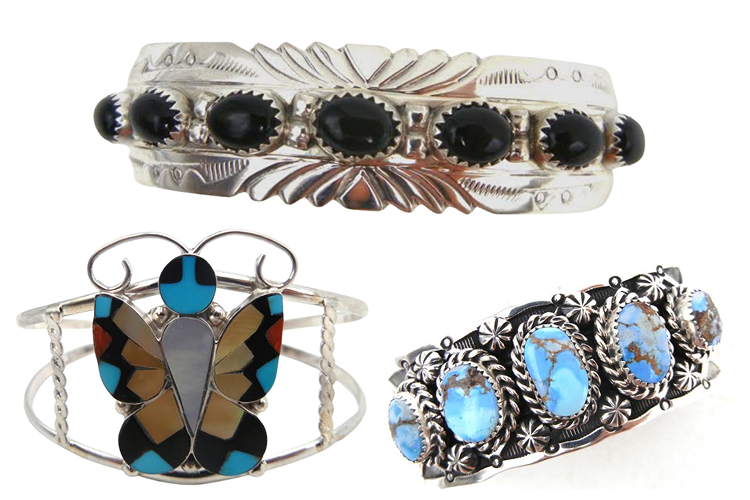
Bracelets and wrist cuffs have long been worn by Native American tribes for both beauty and meaning. Among the Zuni, bright colors and inlaid stones form blossom patterns, while Navajo silversmiths often craft wide silver cuffs set with turquoise and detailed stampwork.
Earrings
Native American earrings vary greatly by tribe. Navajo earrings showcase detailed silversmithing and inlaid stones, while Santo Domingo artisans create beaded designs from small, cut stones, often producing vivid color patterns.
Necklaces and Pendants
Among the most iconic necklace styles is the Navajo squash blossom, featuring silver beads and turquoise stones. Zuni artisans produce fetish necklaces composed of hand-carved animal figures, each carrying cultural and spiritual meaning.
Bolo Ties
Silver bolo ties are a signature accessory of Southwestern tribes such as the Navajo, Hopi, and Zuni. They combine artistry and heritage, representing a timeless connection to Southwestern identity.
Modern Appreciation and Cultural Continuity
Native American jewelry remains a vital expression of Indigenous creativity. While some methods have evolved, traditional designs and symbolism remain central to both cultural identity and modern art. Many contemporary jewelers and designers draw inspiration from tribal aesthetics, ensuring that these ancient traditions continue to inspire new generations.
Experience Authenticity with Palms Trading Company
Whether you are drawn to the precision of Zuni inlay work, the silver strength of Navajo cuffs, or the organic beauty of Santo Domingo beadwork, the many types of authentic Native American jewelry offer more than adornment; they carry generations of culture, spirit, and skill.
At Palms Trading Company, we proudly offer a wide selection of genuine Native American jewelry, directly sourced from skilled artisans. Our knowledgeable staff and personal shoppers are here to help you find the perfect piece of history and artistry to add to your collection. Contact us today or visit our Albuquerque store to begin your journey into the rich world of Native American jewelry. We’re here to help you discover a piece that speaks to you.